Articles / For Business Owners
For Business OwnersBacklinks: What They Are and Why Your Company Should Care
A backlink is a link from someone else’s website to yours. It sounds like a technical detail, but it decides whether Google and AI will recommend you at all. An explanation without jargon for business owners – including what it costs and how to spot a link not worth paying for.
When you have marketing done for you, sooner or later somebody tells you that you need backlinks. It usually comes across as a done deal one is supposed to understand. This text is for business owners who do not have to understand it – and yet decide about it, because it is paid from their money.
What a backlink is, said plainly
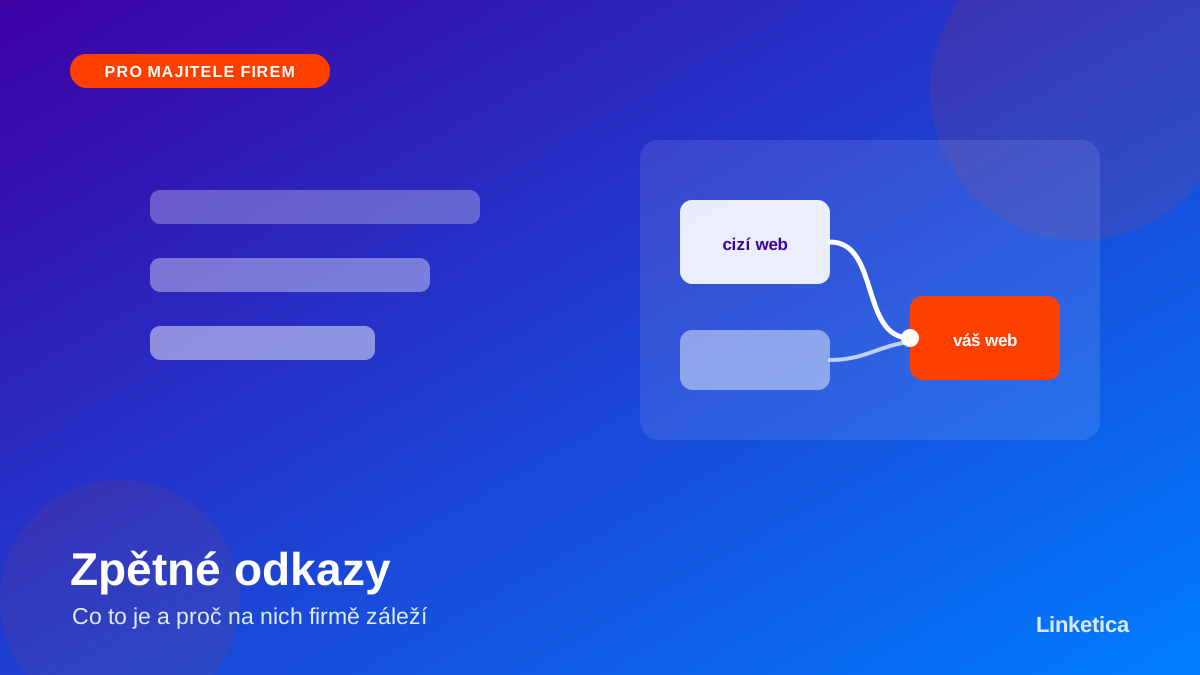
A backlink is a link that leads from someone else’s website to yours. Nothing more. If an industry magazine writes an article about you and your company’s name in it is clickable through to your site, you have a backlink.
What is interesting is what that link means to the machines that sort the internet. Google has worked from the start with a simple reasoning: when others link to somebody, they are probably worth it. It is the same as recommendations between people – you do not believe the man who claims to be the best plumber in town, but you believe three acquaintances who independently recommend him.
And it works the same way with language models today. When somebody asks ChatGPT or Perplexity for a supplier in your field, the model does not assemble the answer from what companies write about themselves on their websites. It assembles it from what somebody else wrote about them.
Why a business owner should care at all
Because without links there is practically no getting onto the first page of results today – and the numbers show it quite harshly.
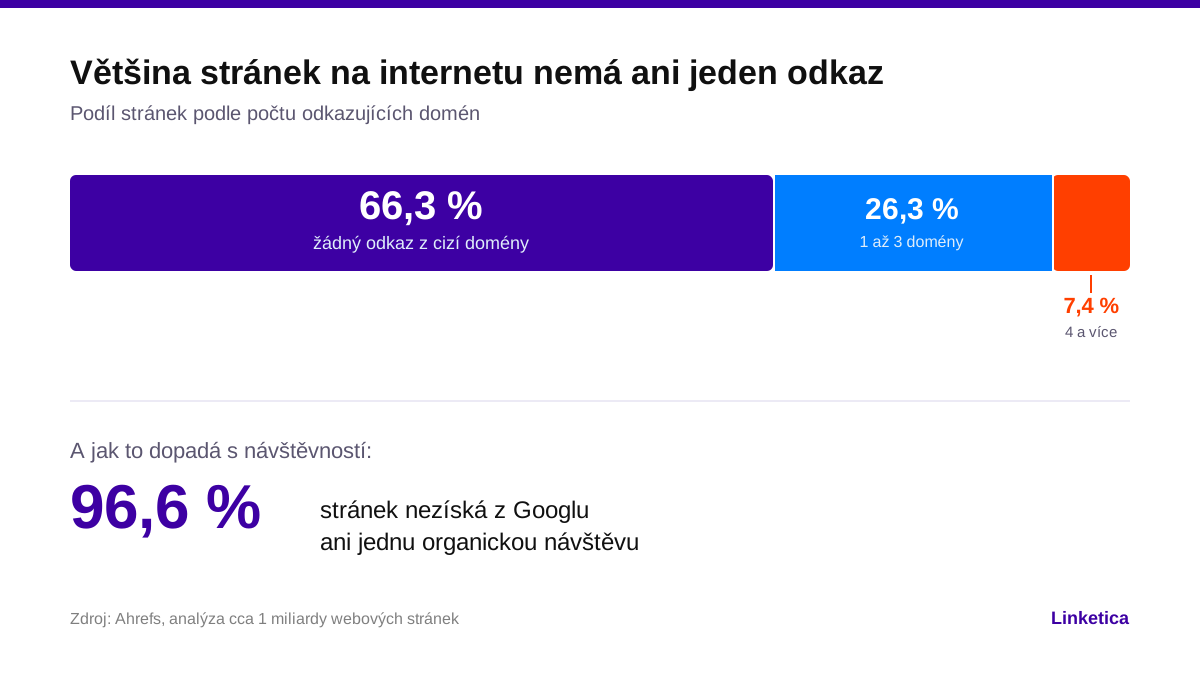
According to an Ahrefs analysis that went through roughly a billion web pages, 66.3% of them have not a single link from a foreign domain. Another 26.3% have one to three. That means the overwhelming majority of content on the internet is, from a search engine’s point of view, alone – nobody recommended it. We collected the other numbers, along with what does not follow from them, in the overview of what studies say about links and PR.
The same analysis found that 96.6% of pages get not a single organic visit from Google. The two numbers are related: a page nobody links to hardly gets anywhere. You can have a great website, honest prices and a product that really helps people – and still nobody knows about you, because in the search engine’s eyes there is no reason to show you to anyone.
The second thing that changed over the past two years: the number of people who click anything in the results at all is falling. When Google shows an AI answer at the top, the share of clicks drops roughly by half. But that does not make links pointless – on the contrary. When fewer people click through, the price of being mentioned directly in that answer rises. And the model gets to it through the sources that wrote about you.
Where links come from
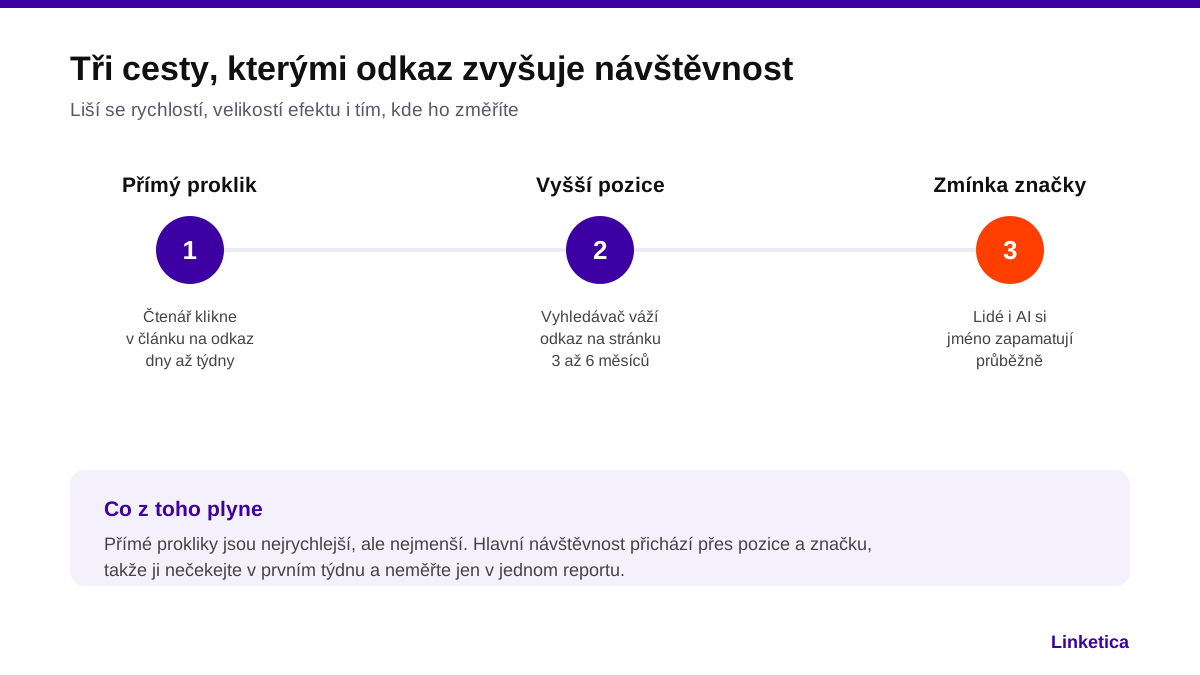
There are essentially three routes and it is good not to mix them:
- Somebody writes about you by themselves. The most valuable and at the same time least predictable variant. It needs a reason – your own data, an interesting story, a new product, an expert opinion.
- You arrange a paid publication with a medium. That is called a PR article or commercial content. You pay for the space and the newsroom’s time, not for the link itself – a difference that is legally significant as well.
- You buy the link as such. Cheapest and riskiest. Websites that exist only to sell links have no readers, and Google can recognize them. Here money turns into numbers in a spreadsheet, not into results.
Most companies in practice move between the first and the second point. The third is a trap you can fall into mainly through offers of the “50 links for €200” kind – we take it apart in the text on when buying links makes sense and what to watch out for.
How to recognize a link worth having
This is the core of the whole matter and at the same time what to ask suppliers about. Two links with the same price can have completely different value – the difference lies in five things.
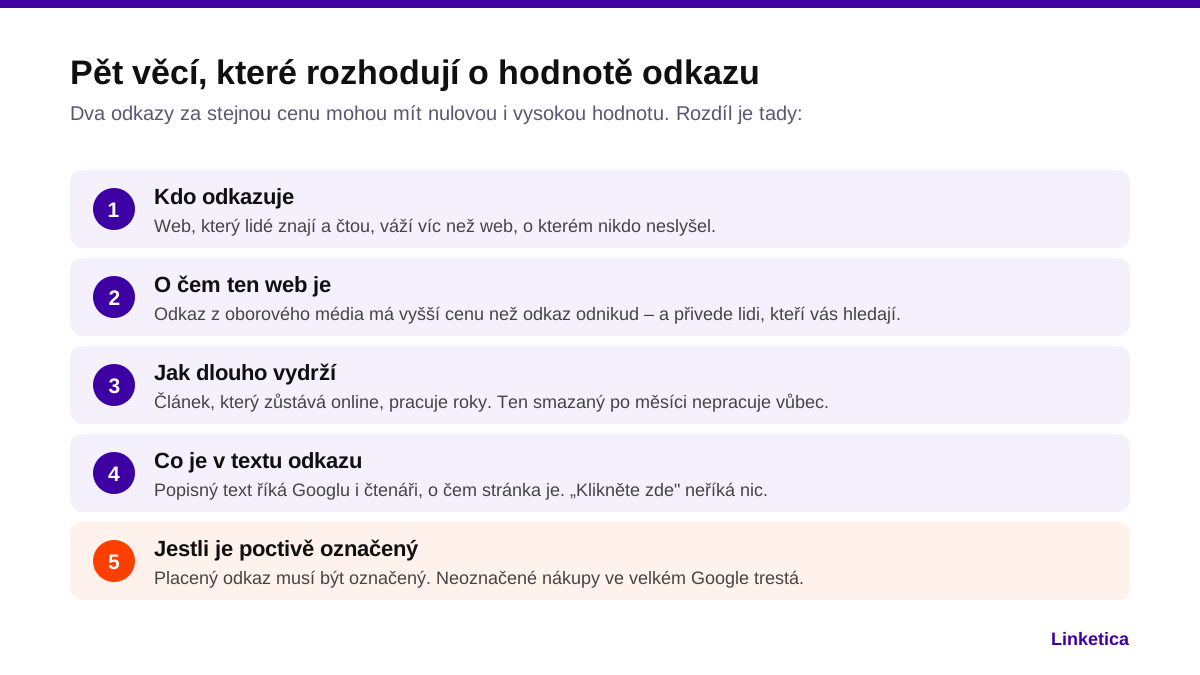
A few practical notes on them:
- Relevance often beats numbers. A link from a smaller industry website your audience reads is usually more valuable for a small company than a link from a big portal where your text interests nobody. The ideal is to have both, but when you must choose, start with relevance.
- Ask how long the article stays online. A one-year publication and a permanent one differ in the price list by a few percent, but in value several times over.
- A paid link must be labelled. Google requires the attribute rel="sponsored" or nofollow on paid links. A supplier promising you unlabelled paid links at scale is not selling you an advantage but a risk.
What it costs and how to work out whether it pays
On the Czech and Slovak market, publication prices on ordinary websites range roughly from tens to lower hundreds of euros; premium media go into the thousands. The spread is huge and few people explain it – hence the five factors above.
You can work out the return yourself on paper. Take the price of the article and divide it by your average margin on one order. You get how many orders the article must bring over the whole time it is online to pay for itself. For a company with a €200 margin per order and an article for €320 it is fewer than two orders – over the three years the text keeps working. That is an entirely different question from “is one article worth three hundred euros”.
And count with three effects at once, not one: the people who come from the article directly, the shift in search and the mention AI assistants draw on. Companies typically measure only the first and are surprised it does not add up.
How long it takes
Here one has to be honest, because this is exactly where most cooperations founder. Links are not a performance channel. Paid advertising brings visits tomorrow and stops the day after the budget is switched off. A link is the opposite case: almost nothing happens in the first weeks, the effect adds up over months and then stays.
A reasonable horizon for evaluation is three to six months from publication. Whoever promises results within a month is either not telling the truth or selling something else.
Five questions to ask the supplier
- On which specific websites will it run? A list up front, not after payment. If you do not get one, you are not buying links but a promise.
- How many readers do the media have and who are they? Not just a domain authority number – that can be inflated.
- Will the article stay online permanently? And what happens when the medium deletes it?
- Will the link be labelled as advertising? The correct answer is yes, with a paid publication always.
- How will I know it worked? A measurable goal agreed in advance – not an impression after six months.
The most common mistakes
- “We have a great website, we do not need links.” From the point of view of search engines and AI, your website is a biased source – you write it yourselves. What others say about you is what decides.
- “We will buy a lot of them and that will be that.” Ten links from websites without readers are a worse investment than three from the right media. Similar cost, incomparable result.
- “We will do it once and be done.” The competition carries on. A media profile is like maintenance – not a big purchase once every five years.
- “Links are dead, now it is AI.” Exactly the opposite. Mentions in trustworthy sources are what AI answers are built from.
Where to start when you are starting
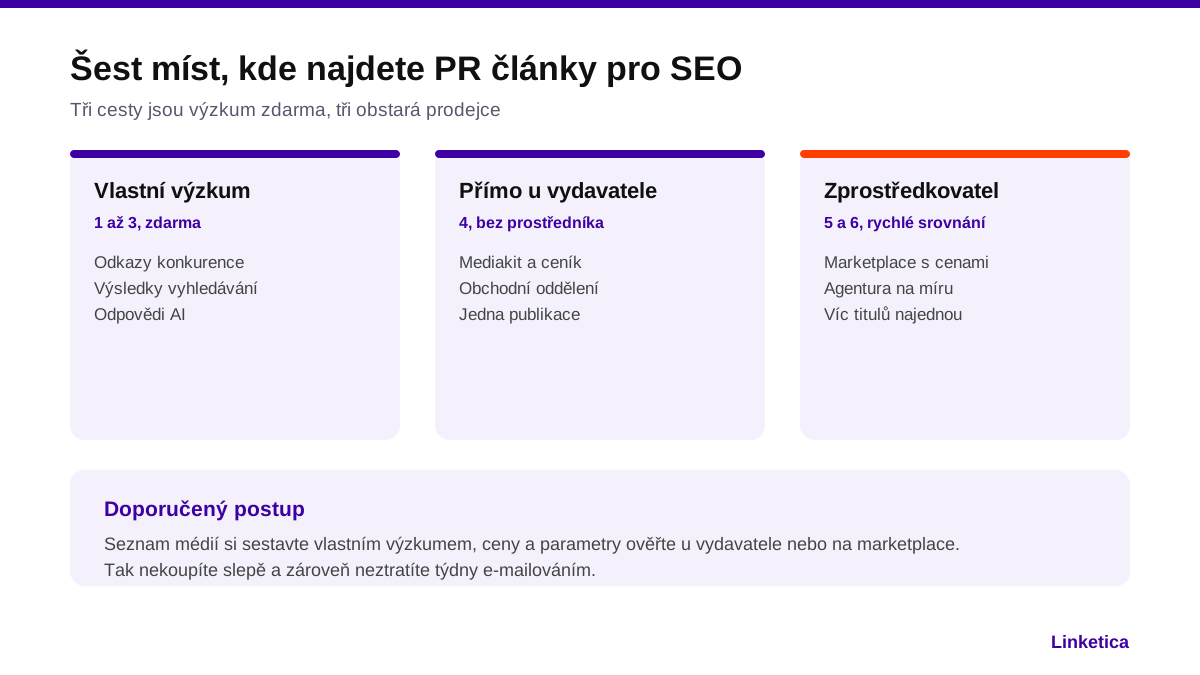
The cheapest first step costs nothing: look at where your competition appears. Search for a competitor’s name and go through which media wrote about them. It is a ready-made map of where you are missing – and at the same time a list of titles your customers actually read.
The second step is deciding how much you want to put into it per year, not per month. Three well-chosen publications a year do more than twenty random ones.
And when you want to know how the whole cooperation runs and what to reasonably demand from a supplier, continue with the text link building: what it is, how it works and what to expect.
Časté otázky
What is a backlink?
How many backlinks does a company need?
How much do backlinks cost?
Must a paid link be labelled?
How long until backlinks take effect?
Are links pointless because of AI?
Zdroje a doporučená literatura
Zjistěte zdarma, jak vás vidí AI
Nechte jméno, e-mail a telefon a odemkneme vám online audit AI viditelnosti + checklist „Doporučuje vás AI?“ ke stažení.
Chcete rovnou nakupovat PR články a zmínky? Vyzkoušet Linketicu · Nezávazná poptávka na míru
Zadáním kontaktu souhlasíte s jeho použitím pro zpřístupnění auditu a zaslání tipů. Údaje nepředáváme dál. · Linketica.com