Articles / For Business Owners
For Business OwnersThe PR Article: What It Does for a Company and What to Expect From It
A PR article is not an ad or a promotional leaflet. It is a text in a medium that your target customer reads, and it speaks about you at the moment they are solving something. We explain how it differs from advertising, what it should contain, what it costs and how long until you can tell whether it worked.
When a company first hears an offer for a PR article, it usually imagines paid praise of itself. Sometimes it even looks that way – and exactly such articles do not work. This text explains what a PR article really is, what a company can use it for and how to tell you are spending on it sensibly.
What it is
A PR article is a text published in another medium, whose publication the company agreed with the medium. It looks like an ordinary editorial article because, in form, it is one: it has a headline, a structure, and it is written for the readers of that title. What distinguishes it is the label that it is a commercial message, and the fact that a payment took place for the publication.
What you buy for that money is not a link. It is space in a medium, the attention of its readers and the newsroom’s time. The link is a consequence.
How it differs from advertising
Advertising and the PR article behave almost oppositely – and that is the main reason there is no point pitting them against each other.
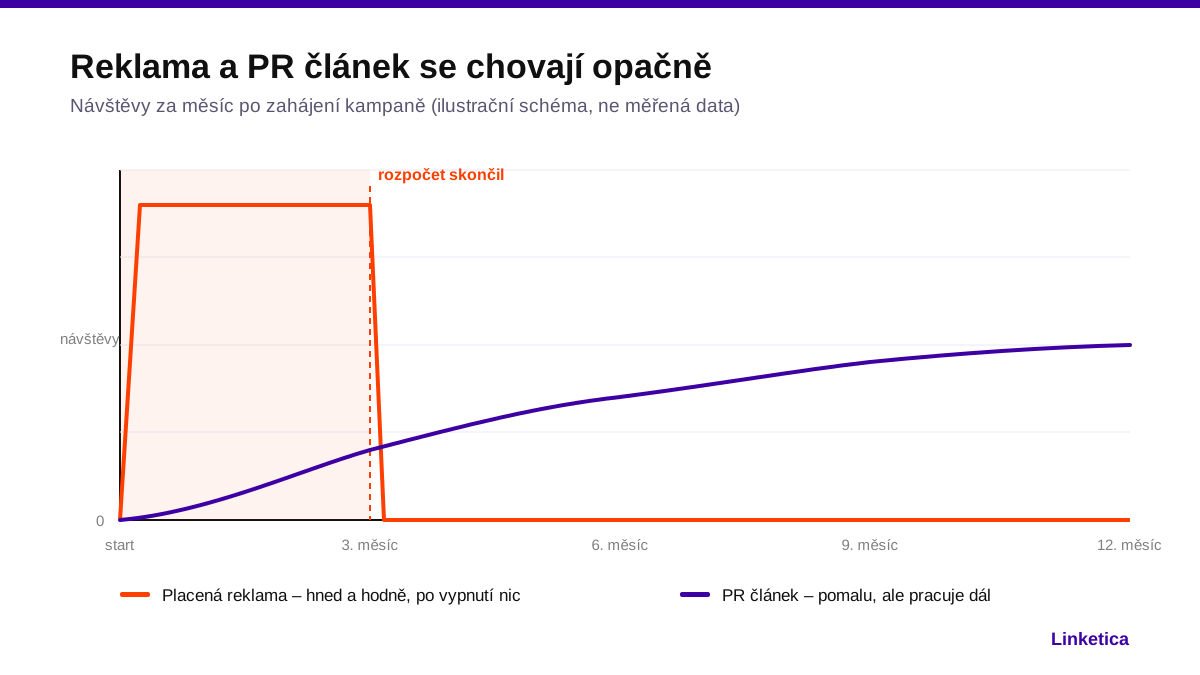
Paid advertising brings visits immediately. You stop the budget and the next day the effect is zero. It is rent: you pay for every arrival again.
A PR article starts slowly. Almost nothing happens in the first weeks, then people start coming from the article, after a few months a shift in search joins in, and the text keeps working years after payment. It is more a purchase than a rent – with the disadvantage that in the first month you have nothing to show.
The practical conclusion: if you need revenue this month, a PR article will not solve it. If you want people to know and find you in a year, advertising alone will not solve that either.
Everything a company gets from one article
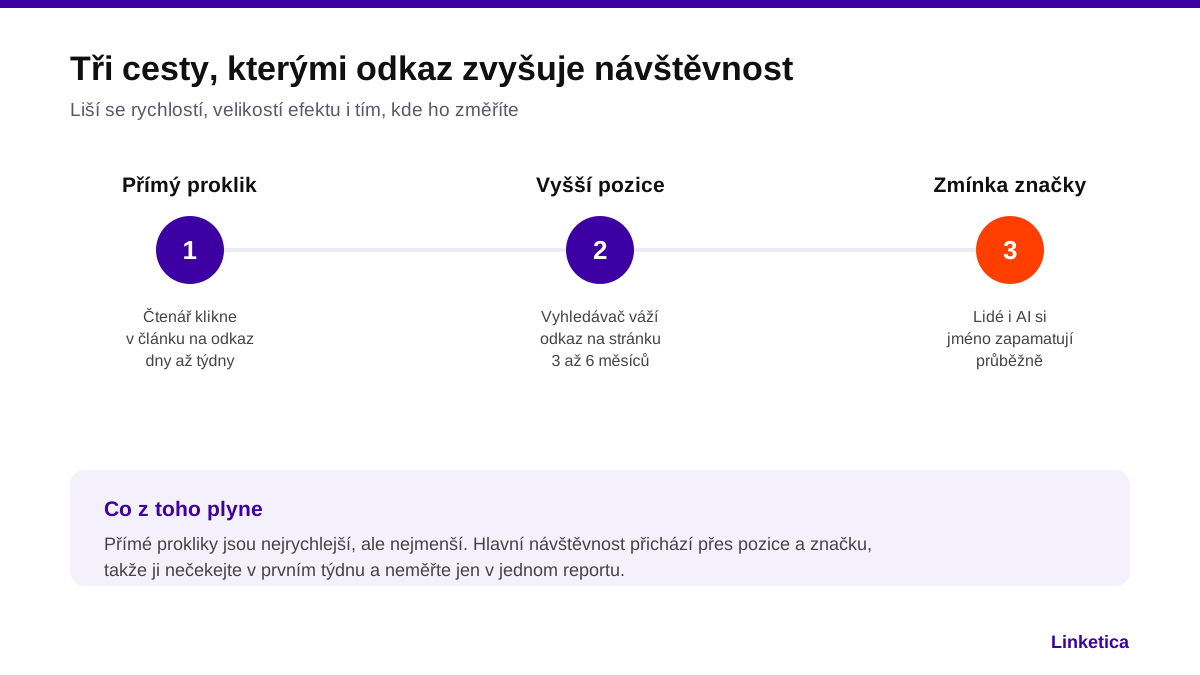
Companies typically measure one thing – how many people came from the article – and are then disappointed. There are in fact three effects and they add up:
- People who come directly. The most valuable ones: they read the whole article and clicked because the topic interests them. There are fewer of them than from advertising, but they buy better.
- A shift in search. A link from a trustworthy medium strengthens the authority of your website as a whole, not just one page. It shows over months.
- A mention AI draws on. When somebody asks ChatGPT or Perplexity for recommendations in your field, the model answers from what third parties wrote about companies. Your own website is a biased source to it.
The third point was insignificant two years ago and today it is one of the main reasons to go into the media. The share of people who click anything in search at all is falling – and with it the price of being named directly in the answer rises. We have the numbers in the overview of what the studies say.
What a good PR article should contain
The most common reason PR money is wasted is not a bad medium. It is a bad text: the company sends its marketing material and is surprised nobody reads it to the end.
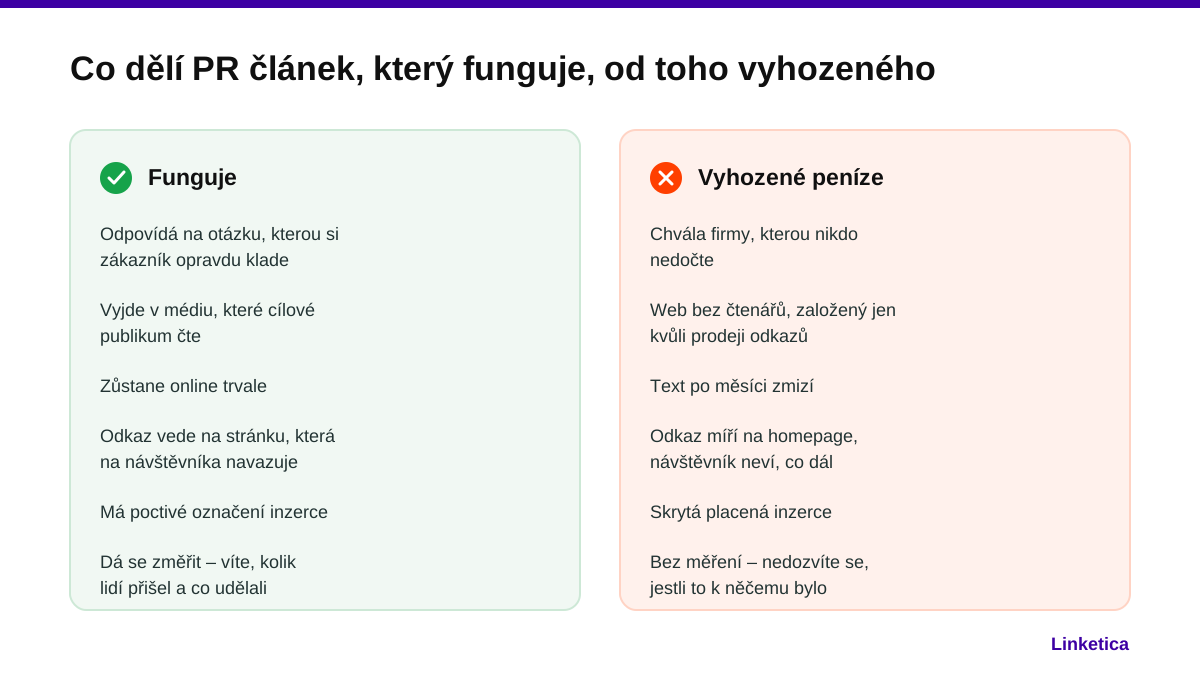
What works is content that gives the reader something even without the link. Practically it means one of three things:
- A guide or an explanation. How to choose, what to watch out for, what the parameters mean. Every company can do this better than anyone else – it has it in its head daily.
- Your own data. Anything only you know: how prices in your field changed over five years, what customers most often return, how long delivery takes. The competition does not have the data and media take it gladly.
- A concrete story. The case of a customer who solved something. With numbers, not with adjectives.
What does not work: the company’s history, “we have been on the market for 20 years”, a list of certificates and any sentence that could be written about any company in the field.
What it costs
On the Czech and Slovak market, the price of a publication ranges roughly from tens of euros on small websites to thousands in premium media. That spread is not random – you pay for domain authority, real readership, the strictness of the newsroom and for whether the text stays online permanently.
To the publication price add writing the text, unless you write it yourself. That tends to be another hundred euros or two, and it is the part where saving does not pay – expensive space with a bad text is a worse investment than cheaper space with a good one.
The return is calculated simply: divide the article’s price by the margin on one order. Out comes the number of orders it must bring over the whole time it is online. Mostly you find it is single digits – and the decision suddenly gets much easier.
How long until you can tell whether it took
A reasonable horizon is three to six months. During the first month you will see visits from the article, but not the SEO effect or AI visibility – those get going more slowly.
So that there is anything to evaluate at all, agree on measurement before publication: your own tagged link (UTM), so you recognize visits from the article in analytics, and one specific question you will ask yourself in six months. Without that, a year later you will be arguing from impressions.
Frequent mistakes
- A link to the homepage. The visitor comes from an article about a specific problem and lands on a generic front page. Link to the page that follows on from the text.
- One article and waiting. One publication is a test, not a campaign. Evaluating makes sense with at least three.
- Publication in the cheapest possible medium. Websites without readers are cheap precisely because nobody reads them.
- Hidden advertising. Unlabelled paid content is a risk for the medium and for you. Honest labelling does not lower the article’s value in practice.
- Deleting articles after the season. A text that stays works next year too.
How to start
Write down the three questions your customers ask most often before they buy from you. Each of them can carry an article that has something to say – and it is at the same time content your customers actually search for.
Then choose media, not prices: two or three titles you know your audience reads. The rest is craft – and its course is described in the article on how link building works step by step. If you are rather dealing with an offer that landed in your inbox, start with buying links.
Časté otázky
What is a PR article?
What is the difference between a PR article and advertising?
How much does a PR article cost?
What should a PR article be about?
How long until you can tell whether a PR article worked?
Zdroje a doporučená literatura
Zjistěte zdarma, jak vás vidí AI
Nechte jméno, e-mail a telefon a odemkneme vám online audit AI viditelnosti + checklist „Doporučuje vás AI?“ ke stažení.
Chcete rovnou nakupovat PR články a zmínky? Vyzkoušet Linketicu · Nezávazná poptávka na míru
Zadáním kontaktu souhlasíte s jeho použitím pro zpřístupnění auditu a zaslání tipů. Údaje nepředáváme dál. · Linketica.com