Articles / For Business Owners
For Business OwnersWhere Do I Find Quality PR Articles for SEO: Six Ways to Choose Media Yourself
Quality PR articles for SEO can be found in six places: competitors' links, search results, AI answers, publishers, a marketplace and an agency. We show how to use each route, how to narrow a long list to three media and how to tell that a title has not only links but also readers.
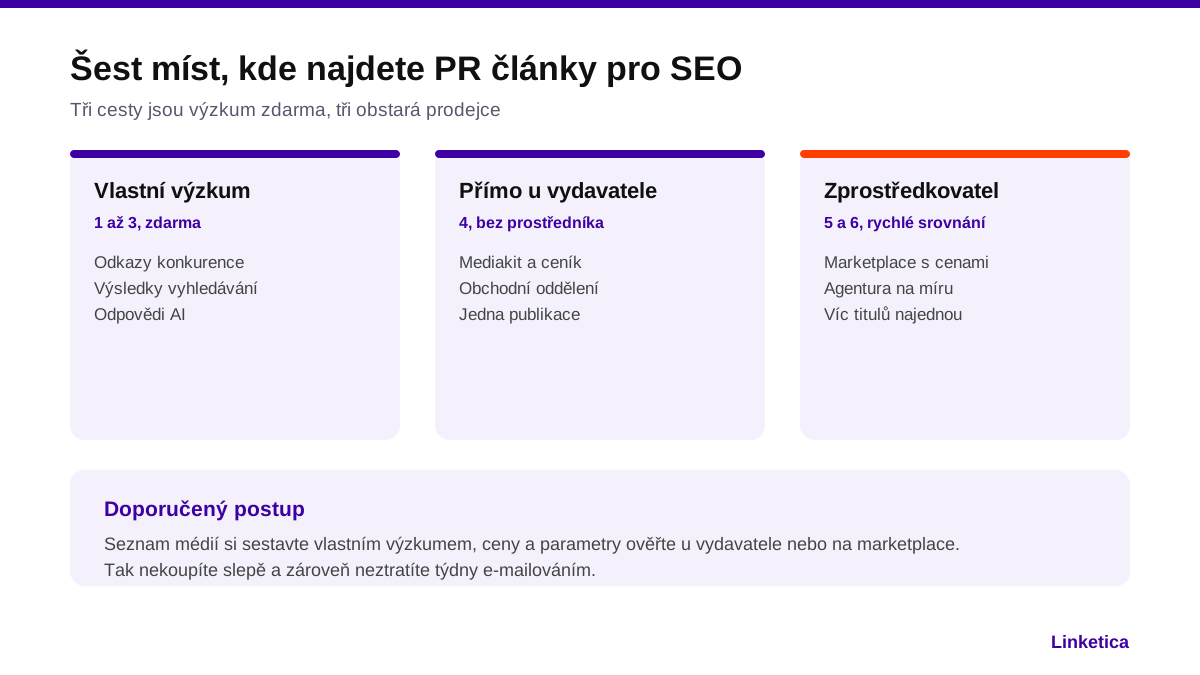
Quality PR articles for SEO can be found in six places: in competitors’ links, in search results, in AI answers, directly at publishers, on a marketplace and through an agency. The first three you can do yourself for free and they tell you where your field is written about. The other three help you buy a publication. The best result comes from a combination: you pick the media by your own research and verify prices and terms with a marketplace or the publisher.
1. Competitors’ links
The fastest route to a list. In a backlink analysis tool (Ahrefs, Semrush and similar) open the links of three to five competitors and look at which media articles link to them. The intersection, meaning sites that link to several competitors but not to you, is a list of titles that write about your field. A paid tool is worth it; a short trial is enough.
2. Search results
Enter into Google the queries your customer types and go through the first two pages. For each result note whether it is a niche medium, a magazine, a comparison site or a company blog. Media that repeat across queries are candidates. Use search operators too, for example site: combined with an industry word and the words “partner content” or “sponsored” – they show where paid publications routinely appear.
3. AI answers
Ask ChatGPT, Perplexity or Google AI Mode the questions your customer would ask and write down which sources the answers cite. Media that the model repeatedly refers to are the most valuable for AI visibility. How to do it systematically is described in how to monitor your brand in AI answers; why mentions in premium media work is explained in the article on PR and AI visibility.
4. Directly at publishers
Most media have an advertiser section with a media kit and a price list. Write to the sales department and ask about prices, format, labelling of advertising and deadlines. It is the cheapest way because there is no intermediary in the price, but you pay with time: for each title you must find out the terms and negotiate yourself. For one publication it is enough, for ten it is not.
5. Marketplace
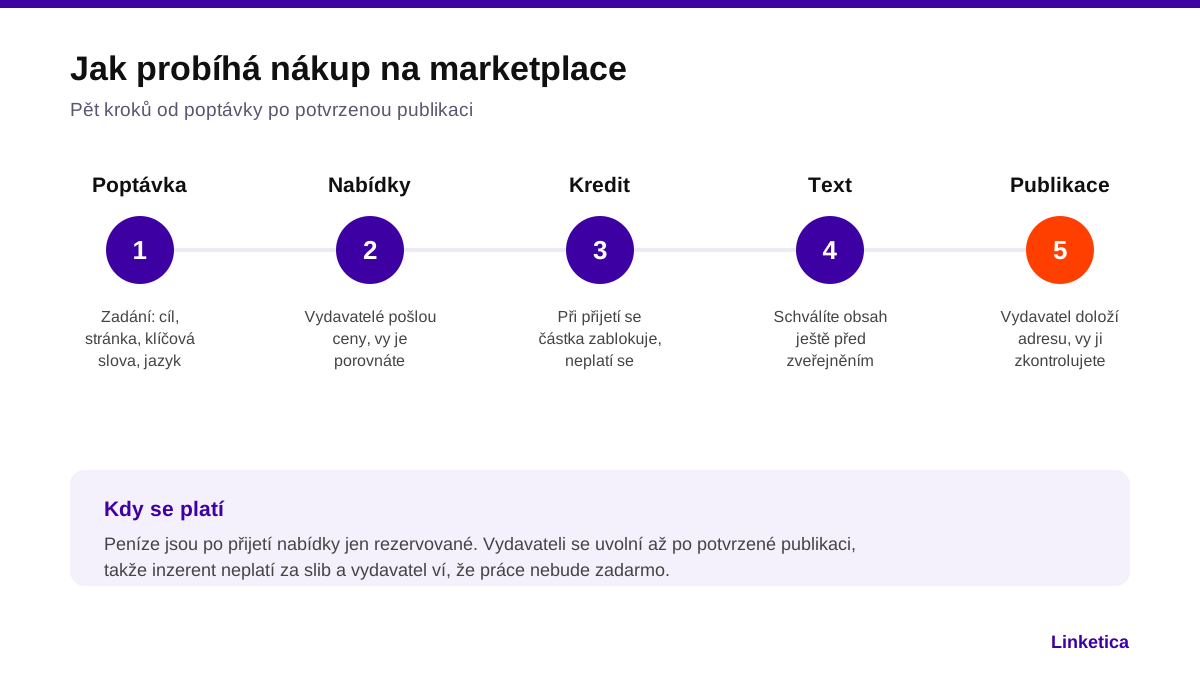
A marketplace gives prices, parameters and terms in advance in one place. You filter and compare media side by side and order through one interface. It suits you when you need several titles or a comparison. How such a purchase works is described in the article on how a marketplace works.
6. Agency
An agency picks the media for you, writes the text and arranges publication. You pay more, save work and get advice. It suits you when you lack time or experience in choosing. A comparison of all routes is in the article on where to buy PR articles for SEO.
How to choose three media from a long list
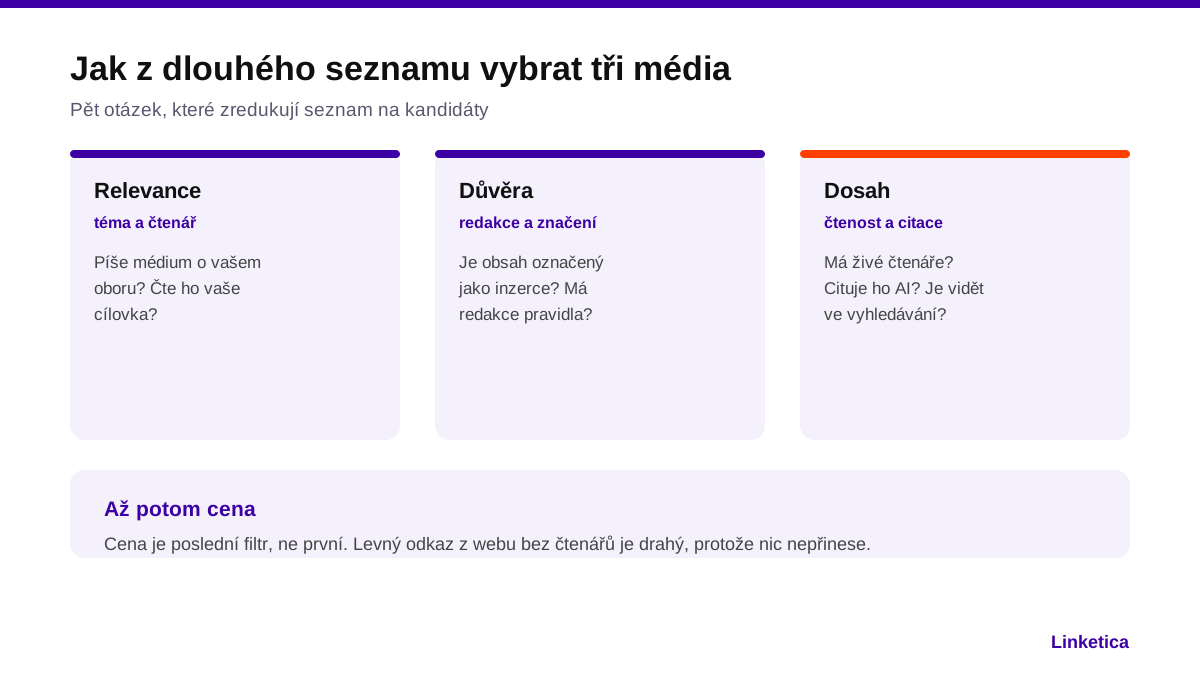
Research will give you ten to twenty candidates. Reduce them by three criteria and leave price for last:
- Relevance. Does the medium write about your field? Does your target audience read it? A link from an unrelated site does not help.
- Trust. Is paid content labelled as advertising and does the editorial team have rules? An unlabelled publication is a risk for you and the medium; see sponsored content without the risk of penalty.
- Reach. Does the title have live readers? Does it show up in search? Do AI answers cite it? Four questions that reveal an empty site are in the article on how to recognise a quality PR article and medium.
What a quality PR article for SEO contains
- a real topic readers care about, not an advertising leaflet,
- a commercial-content label and a link with the appropriate attribute (more in the article on buying links),
- a link to a specific page, not the homepage,
- sources and figures that can be verified,
- the company name where it answers a problem, not in every paragraph.
Summary in three sentences
Find the media yourself first: in competitors’ links, in search and in AI answers. Keep three out of dozens of candidates by relevance, trust and reach, and only then deal with price. Verify terms and prices with the publisher, on a marketplace or through an agency depending on how much time you have.
Where next
- How to write a PR article that an editorial team accepts.
- How to Choose the Right Media for a Client Niche – choosing media for an unfamiliar field.
- How to choose a marketplace for PR articles.
Časté otázky
Where do I find quality PR articles for SEO?
How do I find out which media my competitors publish in?
How do I recognise a quality medium?
Is it better to buy a PR article directly from a publisher or on a marketplace?
How many media should I choose to start with?
Zdroje a doporučená literatura
Zjistěte zdarma, jak vás vidí AI
Nechte jméno, e-mail a telefon a odemkneme vám online audit AI viditelnosti + checklist „Doporučuje vás AI?“ ke stažení.
Chcete rovnou nakupovat PR články a zmínky? Vyzkoušet Linketicu · Nezávazná poptávka na míru
Zadáním kontaktu souhlasíte s jeho použitím pro zpřístupnění auditu a zaslání tipů. Údaje nepředáváme dál. · Linketica.com