Backlinks and PR in Numbers: What the Studies Say
Much is claimed and little is measured around links and PR. We collected the numbers from public studies – Ahrefs, Pew Research, Semrush, Cloudflare – and with each one we also write what cannot be concluded from it. An overview for anyone deciding how much to put into the media.
Backlinks and PR are talked about in impressions: “that does not work any more”, “today it is all AI”, “a good website is enough”. Rarely does anyone attach a number. This article collects what can be substantiated from public studies – and with every number it honestly states what does not follow from it. The latter tends to be more important.
1. Most content on the internet has not a single link
Ahrefs went through roughly a billion web pages in its analysis. The result: 66.3% of them have not a single link from a foreign domain. Another 26.3% have one to three. Only 7.4% of pages have four or more referring domains.
The same analysis found that 96.6% of pages get no organic visit from Google at all.
What follows: links are scarce. You do not need hundreds of them to be above average – a handful is enough, provided they come from sensible sources. If you are not sure what exactly this is about, start with the explainer on what backlinks are.
What does not follow: that links by themselves bring traffic. The correlation between the number of referring domains and traffic is documented; causation is not proven by it – good content earns links and visits at the same time.
2. People click less in the search results
Pew Research Center measured real user behaviour in 2025. When an AI answer appeared in the results, the share of visits in which a person clicked any link fell from 15% to 8%.
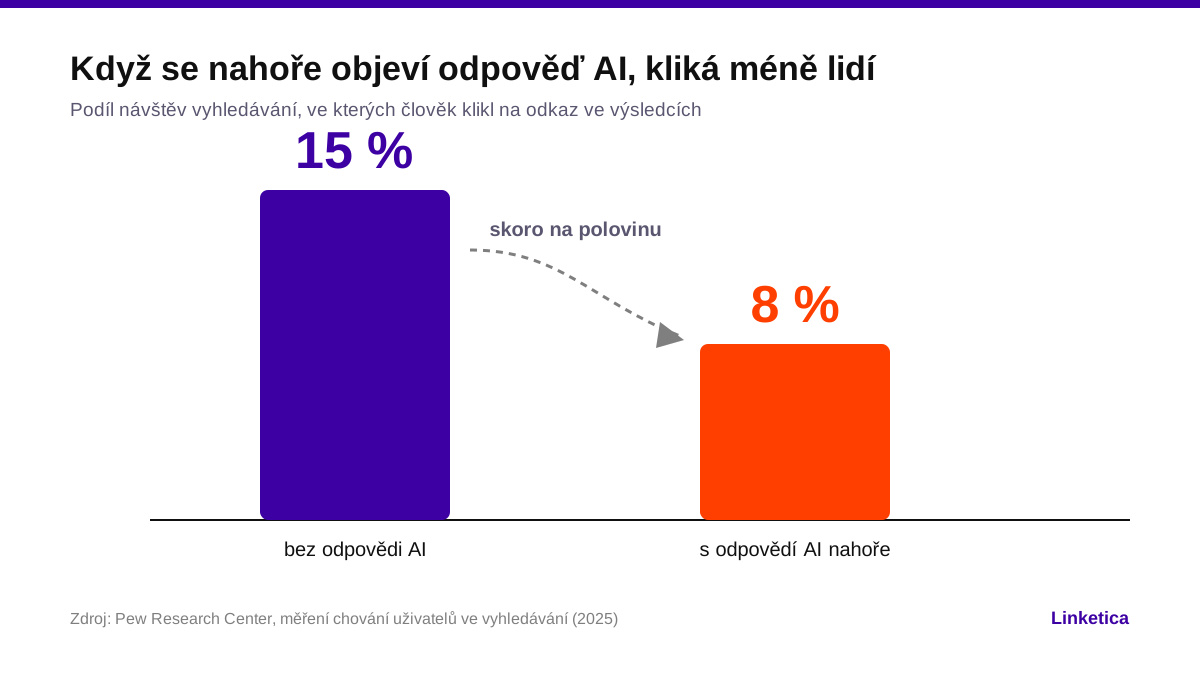
What follows: relying only on a position in the results is an ever weaker strategy. The value of being named inside the answer grows.
What does not follow: that SEO is over. Eight percent of an enormous volume of queries is still an enormous number, and with shopping queries people return to clicking – before paying they want to see the website.
3. Visits from AI are few, but valuable
Semrush calculated in its AI traffic study that a visitor arriving from AI search is on average 4.4 times more valuable than a visitor from classic organic search. Ahrefs measured on its own data a 23 times higher sign-up rate for AI visits.
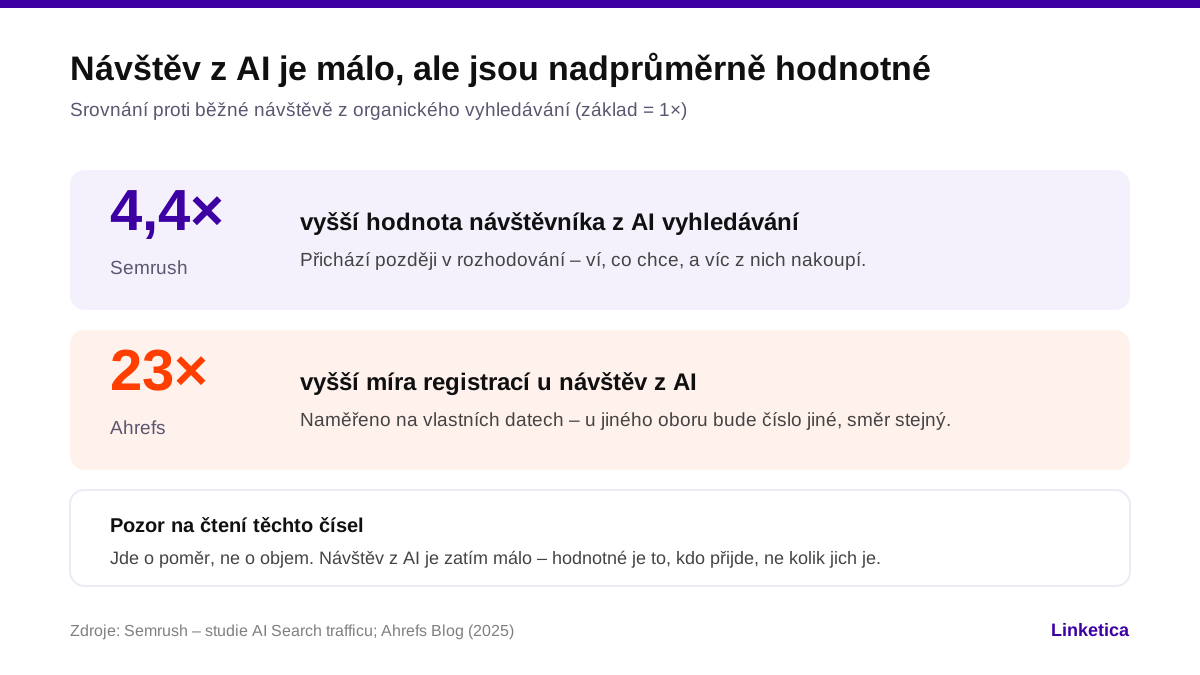
What follows: that visitor arrives later in the decision. The model did the research for them, so they come to the website with a formed idea of what they want.
What does not follow: that AI visibility will replace the other channels. These are ratios, not volumes – the share of AI in total traffic is still in single percentage points for most websites. And Ahrefs measured itself, i.e. one specific B2B tool; an e-shop selling shoes will get a different number.
4. AI takes much more than it returns
Cloudflare published in 2025 the ratio between how many pages the bots download and how many visits the website gets back. With Google, roughly 14 downloaded pages fall on one visit; with Perplexity it is hundreds, with OpenAI about a thousand and with Anthropic tens of thousands.
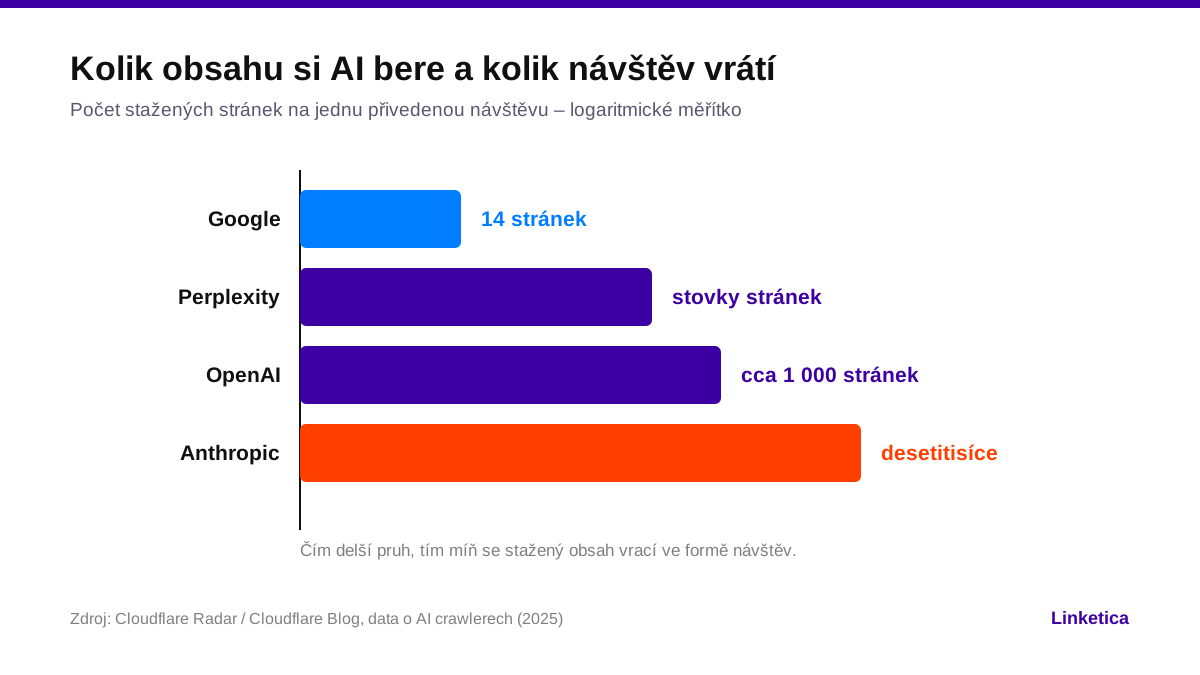
What follows: for publishers it is an economic problem and it drives today’s debate about blocking bots. For a company that wants to be visible it means something else: models read a lot and name little – which makes it matter all the more whether anyone writes about you anywhere.
What does not follow: that blanket-blocking the bots makes sense. By blocking, a company removes itself from the answers that send the best-converting traffic.
5. AI cites independent sources, not brand websites
Analyses of citations in AI answers repeatedly show the same pattern: models take their answers mainly from media, comparisons, reviews and community discussions. The brand’s own website tends to be among the supplementary sources – from the model’s point of view it is a biased party.
What follows: this is the strongest argument for a PR article that exists today. A mention in a medium is not just a link – it is a ticket into the answer.
What does not follow: that your own website does not matter. When the model recommends you and the visitor arrives at a website that does not answer their question, the mention was for nothing.
How to work with these numbers so they do not fool you
- Ask what was measured on. Studies on the English-speaking market, on one industry or on the own data of a company that sells the tool have their limits. The direction tends to hold, the specific number often does not.
- Distinguish ratio and volume. “4.4 times more valuable” does not mean “4.4 times more money” – when there are ten times fewer visits.
- Correlation is not causation. Websites with more links have more visits. It does not automatically mean that buying links brings visits.
- Measure your own. The most valuable number is not from any study but from your analytics – how many people came from a specific article and what they did.
Summary in three sentences
Links are scarce and most websites have none – so even a few are enough to set you apart. Clicking in search is declining, and so the price of being mentioned directly in the answer rises. And whether AI mentions you is decided outside your website – in what somebody else wrote about you.
Where to go next
- Backlinks: What They Are and Why Your Company Should Care – an explanation of the concept without jargon, including how to calculate the return.
- The PR Article: What It Does for a Company and What to Expect From It – how it differs from advertising and what it should contain.
- Link Building: What It Is, How It Works and What to Expect From It – the five phases of cooperation and four questions for the supplier.
- Buying Links: When It Makes Sense and What to Watch Out For – the eight warning signs in an offer.
Časté otázky
How many pages on the internet have no backlink?
By how much do clicks fall because of AI answers?
Is a visitor from AI more valuable?
Does more links automatically mean more visits?
Why does AI cite media and not company websites?
Zdroje a doporučená literatura
Zjistěte zdarma, jak vás vidí AI
Nechte jméno, e-mail a telefon a odemkneme vám online audit AI viditelnosti + checklist „Doporučuje vás AI?“ ke stažení.
Chcete rovnou nakupovat PR články a zmínky? Vyzkoušet Linketicu · Nezávazná poptávka na míru
Zadáním kontaktu souhlasíte s jeho použitím pro zpřístupnění auditu a zaslání tipů. Údaje nepředáváme dál. · Linketica.com