How to Increase Website Visibility with AI Tools: What the Tool Does and What You Must Do
AI tools help with research, outlines and measurement, but they do not increase website visibility on their own. We distinguish three roles of AI in SEO: a helper at work, a gauge of visibility in answers and the destination you want to reach. We show where tools save time, where they mislead and how to turn them into a measurable process.
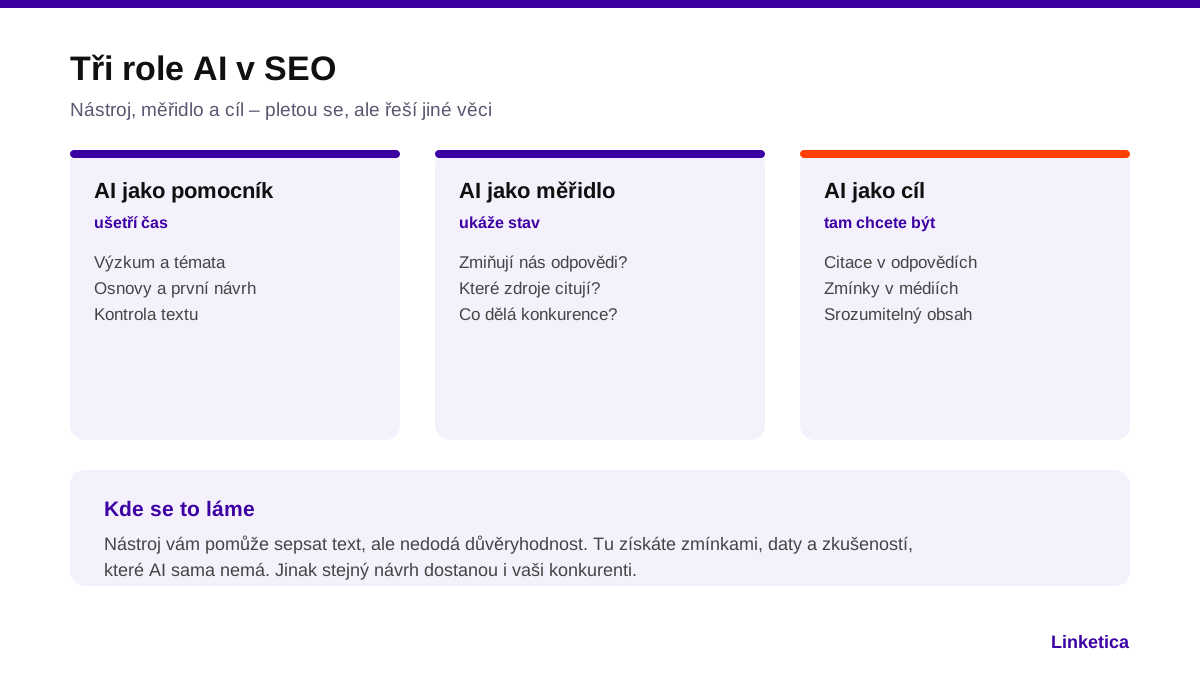
AI tools do not increase website visibility on their own, but they help in three places: they save time at work, show how AI answers see you and advise what to do next. Behind the abbreviation “AI in SEO” hide three different things, and mixing them up leads to wrong purchases. Below we distinguish them and show where a tool saves work and where human judgement is needed.
1. AI as a helper at work
Language models (ChatGPT, Claude, Gemini and others) speed up routine: they summarise competitors, propose an outline, group queries by intent, check a text or suggest a page structure. They save hours, but replace only the first round.
- Topic research: let one query generate related questions and verify them in a keyword tool. A model states things confidently even when it has no search-volume data.
- Outlines and first draft: useful. Without your own inputs, though, a generic text emerges that is already on the web. The process is described in the article on AI-generated content and quality control.
- Structured data: tools can propose markup, but it must match the content of the page; see structured data for AI.
2. AI as a gauge of visibility
A separate group are tools that ask AI answers on your behalf: they find out whether your brand appears, which sources the model refers to and who appears next to you. You can find out the same by hand: ask ChatGPT, Perplexity and Google AI Mode twenty questions your customer asks and note who is mentioned and from which sources. A tool automates it and keeps history. How to do it is described in how to monitor your brand in AI answers.
Two cautions. AI answers change from query to query and from day to day, so a single measurement says nothing. And visits from AI platforms are harder to recognise in analytics; see attribution of visits from AI platforms.
3. AI as a destination
Finally, AI is also the place you want to get to: into an answer that cites your website or mentions your brand. Tools do not help here, content and trustworthiness do:
- Understandable content: a direct answer at the start, clear headings, concrete figures. See how to write content that AI understands.
- Mentions in sources that models read: media, reviews, comparison sites. Why this works is discussed in why AI cites Reddit, reviews and rankings.
- Technical access: models must be able to read your pages. About whom to let in, see AI crawlers on your website.
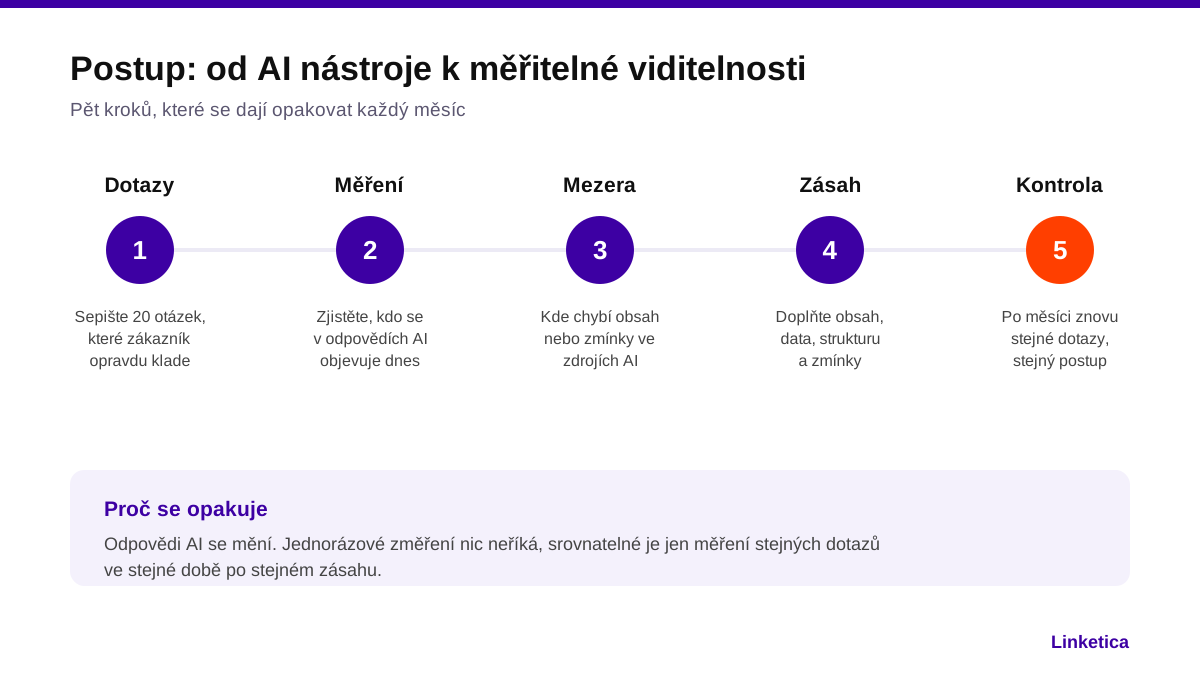
A process you can repeat
- Write down twenty queries your customer really asks, not ones they should ask.
- Measure the current state: who appears in AI answers today and which sources they draw on.
- Find the gap: where your content or mentions are missing in sources models use.
- Intervene: add content with data, improve structure and obtain mentions in media that models read.
- Measure again in a month the same set of queries and compare.
When an AI tool misleads
- It promises “visibility in a week”. No tool controls someone else’s model.
- It generates hundreds of articles. Mass content without added value is exactly what search engines have long been suppressing; see quality control of AI content.
- It quotes figures without a source. A model can invent them. Verify every figure.
- It measures once. Answers change, only repeated measurement is comparable.
Summary in three sentences
AI tools help as a helper (time) and as a gauge (state) and show where you want to get to, but they do not supply the trustworthiness that models cite: it comes from content with data and mentions in sources models read. The process is simple and repeatable: queries, measurement, gap, intervention, check. A promise of instant visibility is always a warning.
Where next
- What AIEO Is and Why It Changes the Rules of SEO – what AIEO is and why it changes the rules of SEO.
- Optimizing for ChatGPT, Perplexity and Google AI Overviews – optimisation for individual platforms.
- Measuring Success: KPIs for SEO and AIEO – KPIs for SEO and AIEO.
Časté otázky
Can AI tools increase website visibility on their own?
What are AI tools actually good for in SEO?
How do I find out whether my brand appears in AI answers?
Is it safe to write articles with AI?
How often should I measure visibility in AI?
Zdroje a doporučená literatura
Zjistěte zdarma, jak vás vidí AI
Nechte jméno, e-mail a telefon a odemkneme vám online audit AI viditelnosti + checklist „Doporučuje vás AI?“ ke stažení.
Chcete rovnou nakupovat PR články a zmínky? Vyzkoušet Linketicu · Nezávazná poptávka na míru
Zadáním kontaktu souhlasíte s jeho použitím pro zpřístupnění auditu a zaslání tipů. Údaje nepředáváme dál. · Linketica.com