Articles / For Business Owners
For Business OwnersPPC or PR Articles? How They Differ, What Each Can Do and Why You Need Both
PPC advertising brings customers this very week, but the day after you switch off the budget nothing remains. A PR article takes months to get going, yet works for years. We compare both forms of promotion without taking sides: what each can do, what it costs, where its weaknesses are and why the best results come from combining them.
Every company with a marketing budget sooner or later faces the same question: put the money into PPC advertising, which brings visits right away, or into PR articles, which build the brand and visibility long term? Vendors’ answers tend to be predictable – a PPC agency recommends PPC, a content seller recommends content. This text tries to lay both side by side honestly, numbers and weaknesses included.
What is what
PPC (pay-per-click) is advertising where you pay per click: Google Ads, the Czech Sklik, ads on Facebook or Instagram. You set a budget, the system shows the ads and you pay for every visitor brought in.
A PR article is a text published in someone else’s medium – in form an ordinary editorial article written for the readers of that title, whose publication the company paid for. You buy space, readers’ attention and a mention or link that stays in the medium.
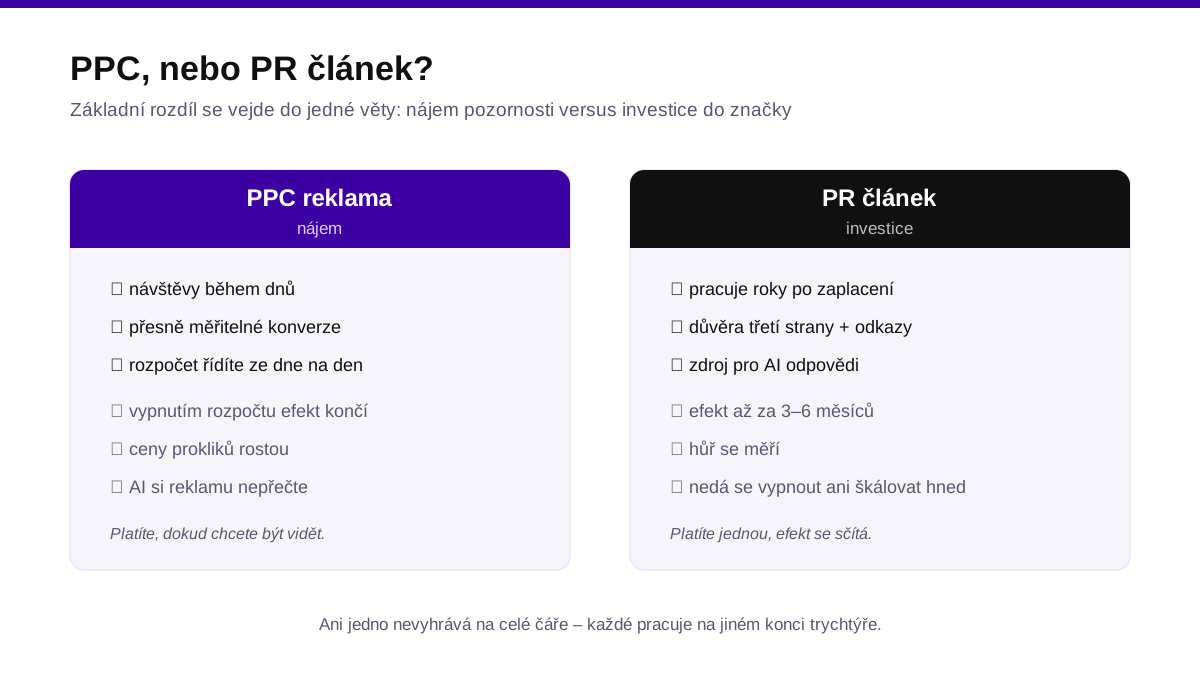
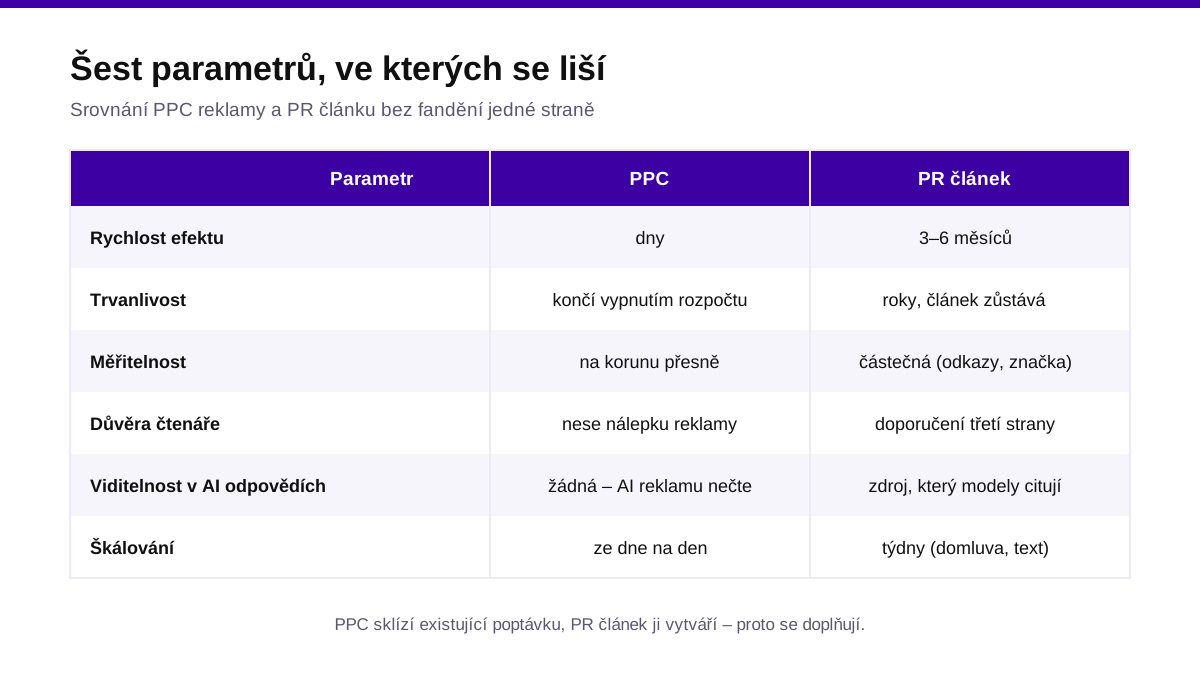
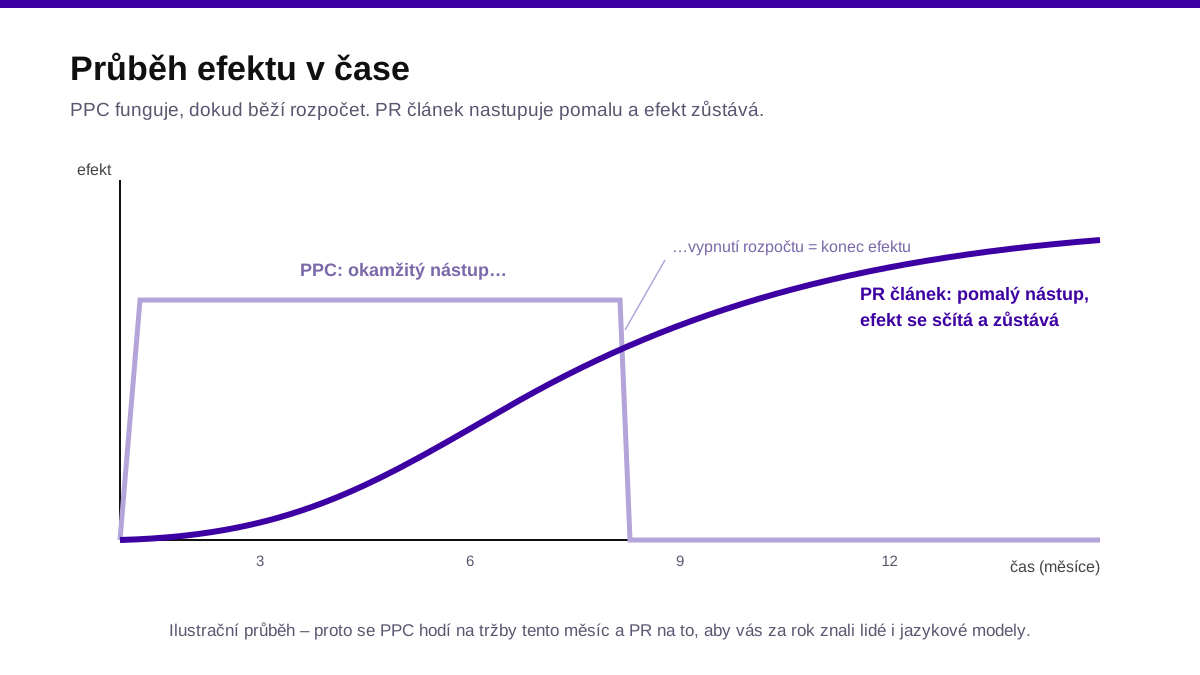
The basic difference fits into one sentence: PPC is rent, a PR article is an investment. Rent ends with the last payment. An investment starts slowly but stays.
What PPC can do and why it deserves respect
- Speed. A campaign launched on Monday delivers visits on Wednesday. No other channel can do that.
- Measurability. For every unit of spend you know how many clicks and conversions it brought. Evaluation is a matter of days, not months.
- Capturing existing demand. Whoever searches for “buy a bike in Brno” wants to buy a bike. PPC catches them at exactly that moment.
- Control. You raise, lower or switch off the budget from one day to the next. You boost the seasonal peak and mute the dead period.
Where PPC is weak
- The effect ends when you switch it off. The day after the budget stops, PPC traffic is zero. After a year of advertising you own nothing but historical campaign data.
- Click prices keep rising long term. In competitive industries (finance, law, insurance) a click costs several euros – and with every additional advertiser in the auction the price climbs.
- An ad carries the label of an ad. Part of the audience ignores or blocks ads. A labelled ad never earns the trust of a text in a medium the reader chose themselves.
- It leaves no trace for AI. Language models build answers from the content of websites and media. An ad that was shown to millions of people for a year does not exist in ChatGPT or in Google’s AI answers – the model cannot read advertising.
- It only harvests demand, it does not create it. PPC reaches those who are already searching. Those who do not yet know about your solution are left alone.
What a PR article can do
- It works long term. A published article stays in the medium, in search and in the data that language models learn from. You pay once, the effect compounds for years.
- It carries third-party trust. A text in a medium the reader opened themselves reads differently from an ad. A recommendation from outside weighs more than anything you say about yourself.
- It builds SEO and AI visibility. A link from an article strengthens the website’s search rankings, and a mention in a trustworthy medium is exactly the type of signal AI assistants use to decide who to name in an answer.
- It creates demand. A good article reaches people who are not searching yet – and when they start, they already know your name. Branded queries then, incidentally, make PPC cheaper too.
Where a PR article is weak
- A slow start. A reasonable horizon for evaluation is three to six months. If you need revenue this month, a PR article will not solve it.
- It is harder to measure. Part of the effect (brand, mentions, citations in AI) never shows up in analytics conversions. Without measurement agreed in advance, a year later you are arguing from impressions.
- It cannot be switched off or scaled overnight. Publications are negotiated and written; from decision to result takes weeks.
- Text quality decides. Expensive space with a bad text is a worse investment than cheaper space with a good one. And paid content must be labelled – a link with the rel="sponsored" attribute is a requirement, not a choice.
Why they complement rather than compete
The trick is that each of these tools works at a different end of the same funnel. PR articles create demand, PPC harvests it. In practice they complement each other in several ways:
- Brand makes performance cheaper. Whoever knows your brand from the media clicks on ads more willingly and converts more. Click-through rate grows, quality score improves and cost per conversion falls.
- PR covers the queries where PPC is most expensive. For keywords with clicks costing units to tens of euros it pays to build organic and AI visibility too – every visit that arrives free from an article is a click you did not have to buy.
- AI answers change the balance of power. With the arrival of AI Overviews and AI Mode – which Google has launched in Czechia as well – the share of clicks from classic results is falling. And AI answers feature media and independent sources, not ads. A brand nobody writes about drops out of the conversation with AI, whatever its advertising budget.
- Remarketing connects both worlds. You can reach the article’s readers again with ads – an audience that has already read about you in a medium responds better than cold traffic.
How to split the budget
There is no universal ratio, but there is a practical guideline: leave PPC the role of performance, give PR the role of foundations. A smaller company usually needs, alongside its running campaigns, three to six well-chosen publications a year – that is single percentage points of a typical annual performance advertising budget. It is not about moving half the money, but about having something left after a year of advertising that does not vanish when the budget is switched off.
And measure both sides fairly: conversions for PPC; for PR articles tagged links in analytics, the trend in branded queries and a monthly check of whether AI assistants name you on the key questions.
Summary
PPC buys visits; a PR article buys the reason people come to you even without ads.
Whoever needs results this month cannot do without PPC. Whoever wants customers and language models to know them in a year cannot do without media mentions either. On the Linketica marketplace you see prices and parameters of hundreds of Czech and Slovak media up front – so you can plan the PR part of your budget as precisely as you are used to planning campaigns.
Časté otázky
What is the difference between PPC advertising and a PR article?
Which is faster – PPC or a PR article?
Is a PR article visible in AI assistant answers?
How much of the budget should go to PR articles alongside PPC?
How do PR articles make PPC cheaper?
Zdroje a doporučená literatura
Zjistěte zdarma, jak vás vidí AI
Nechte jméno, e-mail a telefon a odemkneme vám online audit AI viditelnosti + checklist „Doporučuje vás AI?“ ke stažení.
Chcete rovnou nakupovat PR články a zmínky? Vyzkoušet Linketicu · Nezávazná poptávka na míru
Zadáním kontaktu souhlasíte s jeho použitím pro zpřístupnění auditu a zaslání tipů. Údaje nepředáváme dál. · Linketica.com