Site Reputation Abuse: Why “Publish on a Strong Foreign Domain” Is No Longer a Tip but a Risk
For years it was a popular trick: rent a section on a domain with authority and ride on its rankings. Since the introduction of the site reputation abuse policy, Google actively penalizes the practice – and advice that used to sound clever has become a risk for advertiser and publisher alike. What exactly is forbidden, what remains fine and how to spot an offer to run away from.
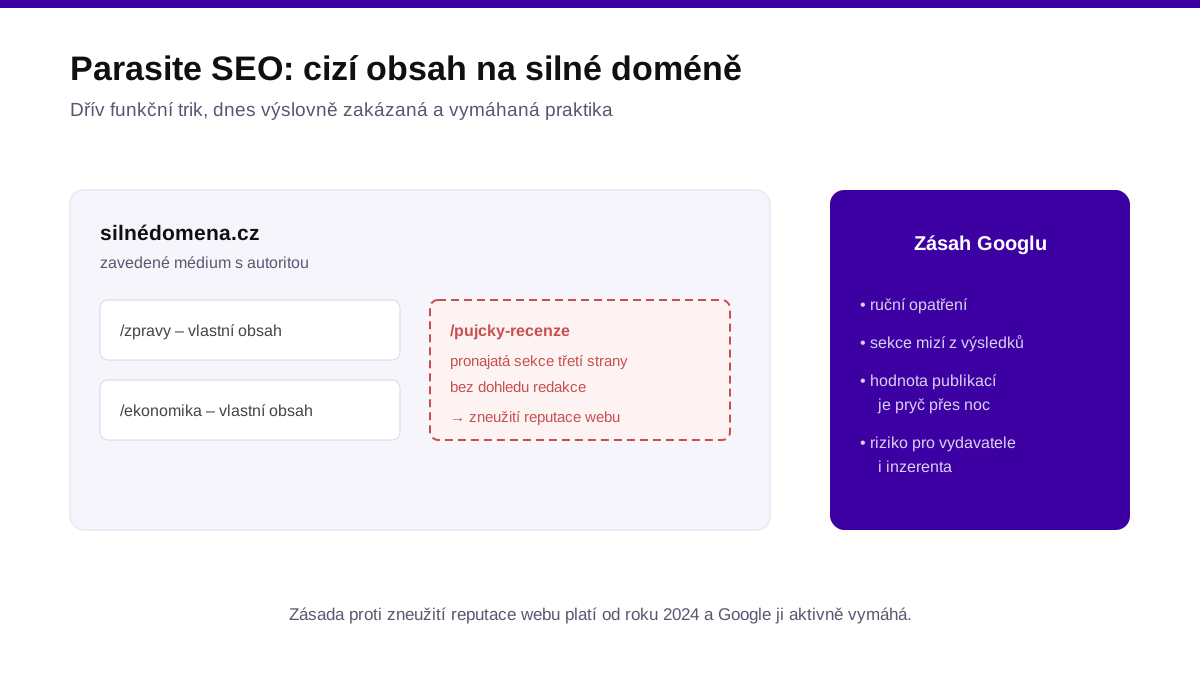
“We will get you onto a domain with authority 90.” That sentence ran through agency offers for years – and truth be told, it was a working tactic: content parked on a strong foreign domain (media, universities, magazines) inherited its rankings. It is called parasite SEO, and since 2024 Google has run an explicit policy against it – site reputation abuse – enforced with manual actions. Affected sections vanish from the results overnight.
What exactly Google penalizes
Site reputation abuse is the publication of third-party content without genuine publisher oversight, whose purpose is to exploit the ranking signals of the host domain – typically rented subdirectories and subdomains full of coupons, loans or reviews that have nothing to do with the site. Two criteria are key: the content is foreign to the site (it is not created for its readers) and the publisher has no editorial control over it, they just collect the rent.
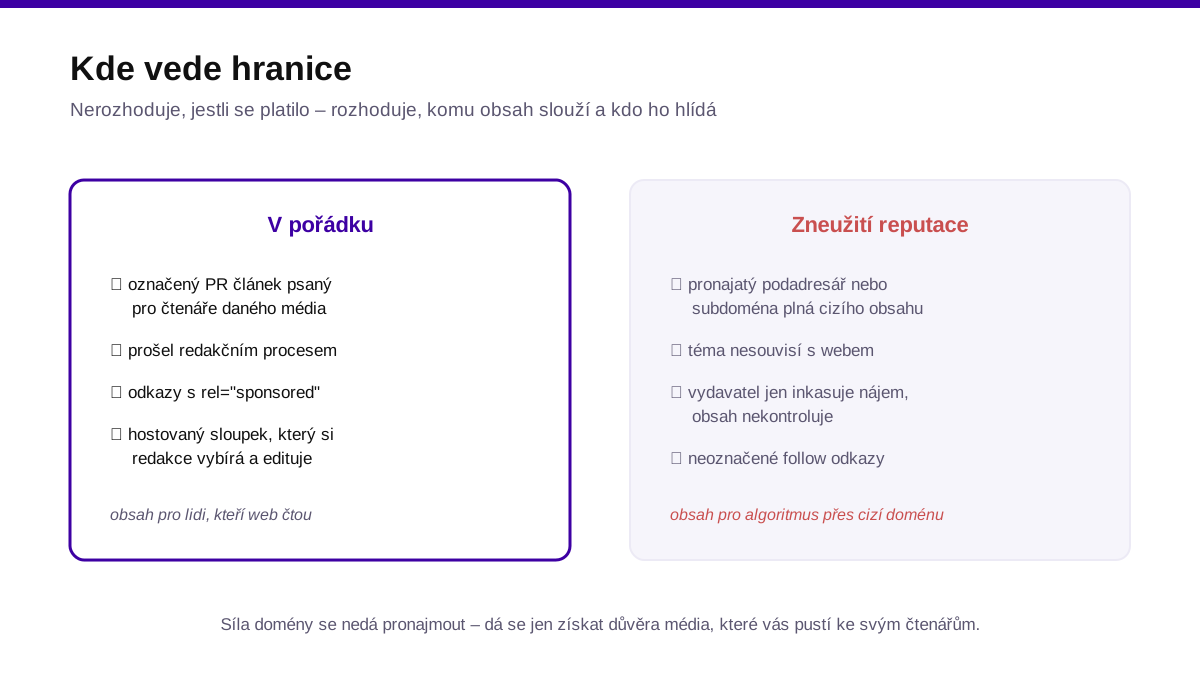
What remains fine
- A labelled PR article written for the readers of the given medium, which went through its editorial process and has links marked rel="sponsored". That is advertising, not parasitism.
- Hosted columns with real oversight – say an expert column by an external author whom the newsroom selects and edits.
- Ordinary cooperation with influencers and media, where the content belongs to the site and its audience.
The line therefore does not run between paid and unpaid content, but between content for the site’s readers and content for the algorithm via a foreign domain.
How to spot a risky offer
- The domain metric is sold, not the medium. “DR 90” instead of the title’s name and its audience.
- Publication in a section unrelated to the site – casino reviews on a news site, loans on a cooking magazine.
- The promise of an unlabelled follow link. A double risk: a violation of both the link rules and the site reputation policy.
- Nobody from the newsroom will ever see the content. When the text passes no publisher approval, you are almost certainly within the definition of abuse.
Summary
Domain strength cannot be rented. You can only earn the trust of a medium that lets you in front of its readers.
For an advertiser the rule is simple: buy publications in media where the content makes sense to readers and passes through an editorial desk. Exactly such media – with a real audience and parameters up front – are what you find on the Linketica marketplace; do not look for rented sections on “strong domains” there.
Časté otázky
What is site reputation abuse (parasite SEO)?
Is a paid PR article site reputation abuse?
How do I recognize a risky offer?
What happens if I have published this way?
Zdroje a doporučená literatura
Zjistěte zdarma, jak vás vidí AI
Nechte jméno, e-mail a telefon a odemkneme vám online audit AI viditelnosti + checklist „Doporučuje vás AI?“ ke stažení.
Chcete rovnou nakupovat PR články a zmínky? Vyzkoušet Linketicu · Nezávazná poptávka na míru
Zadáním kontaktu souhlasíte s jeho použitím pro zpřístupnění auditu a zaslání tipů. Údaje nepředáváme dál. · Linketica.com