Case Study: How an Ad Agency Saved 900 Hours a Year on Buying PR Articles
A twelve-person advertising agency used to buy publications for its clients by hand: researching websites, e-mails, negotiations, eighteen invoices a month. After switching to a marketplace, the time per publication dropped from 4.5 hours to 1.5 hours and delivery time from 19 to 7 days. We break down the numbers from a year of records – including what cannot be read from them.
This case study is about money that never appears on any invoice: people’s time. It describes one year of a Czech advertising agency that buys PR articles and links for its clients – first by hand, then through a marketplace. The agency asked not to be named, so the clients’ industry and some figures are rounded; the ratios and the process match its internal records.
The starting point
The agency: 12 people, roughly 30 active clients, for whom it handles link building among other things – on average 25 publications a month, around 300 a year. The process was honest but entirely manual:
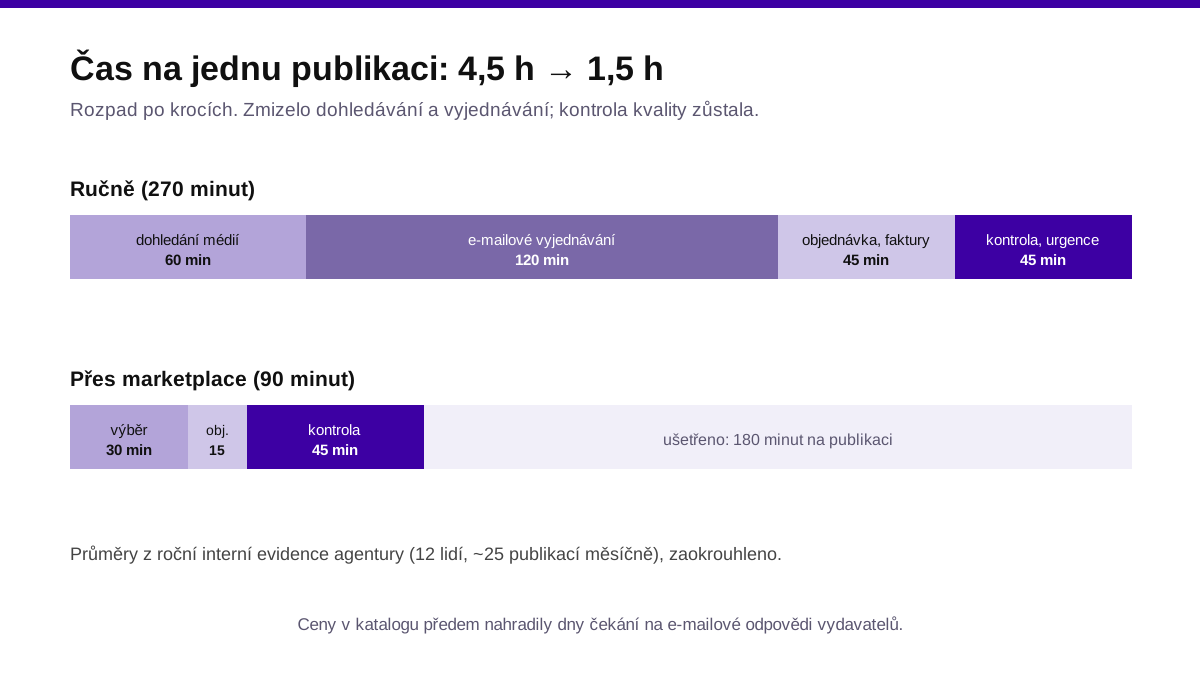
- Researching media for the client’s niche: browsing websites, verifying traffic and contacts – on average 60 minutes per publication.
- E-mail negotiations with the publisher: price, date, terms, reminders – at least 120 minutes of net time, stretched over days of waiting for replies.
- Order and invoicing: every publisher a different invoice, a different due date – 45 minutes, and on top of that the accountant processed eighteen supplier invoices a month.
- Publication check and follow-ups: 45 minutes – and in 9% of cases the deal simply fizzled out (the publisher stopped replying, the article never ran) and the search started over.
Altogether 4.5 hours of work per publication and an average of 19 days from the client’s brief to the published article. At 25 publications a month that meant roughly 112 hours a month – more than half of one person’s full-time job, scattered across three account managers.
What changed
The agency moved its publication buying to a marketplace: media are picked from a catalogue with prices, parameters and previews up front, an order takes a few clicks and invoicing arrives consolidated from one place. The first two steps – research and negotiation – dropped out of the process; text quality control and media selection stayed with the agency, which is as it should be, because that is exactly what the client pays the agency for. The opening chart shows the time breakdown step by step.
The new time per publication: 30 minutes choosing the medium, 15 minutes ordering, 45 minutes checking the text and the publication – 1.5 hours, three hours less. And because prices are visible in the catalogue up front, the agency stopped paying “whatever someone quoted in an e-mail”: the average price of a publication fell by about 8%.
The numbers for one year
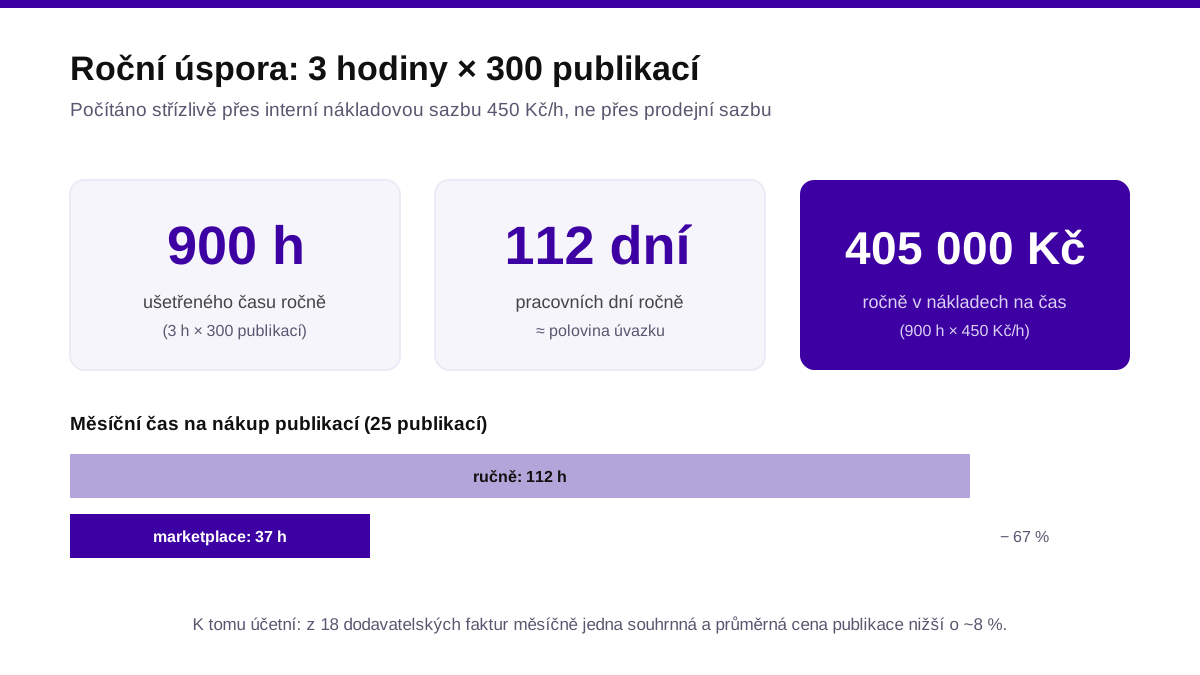
- Time saved: 3 hours × 300 publications = 900 hours a year, i.e. roughly 112 working days – half of a yearly full-time job.
- Money saved: about €16,500 (405,000 CZK) a year. Calculated conservatively using the internal cost rate of an account manager, about €18 per hour; using the agency’s billable rate the figure would be more than double.
- Invoicing: from 18 supplier invoices a month to one. The accountant saves about two hours a month, but above all the differing due dates and payment matching disappeared.
- Delivery: from 19 to 7 days from the client’s brief to publication – no more waiting for publishers’ e-mail replies.
- Fizzled deals: from 9% to 2%. Publications that do not run are handled as a complaint in one place, not with a new round of searching.
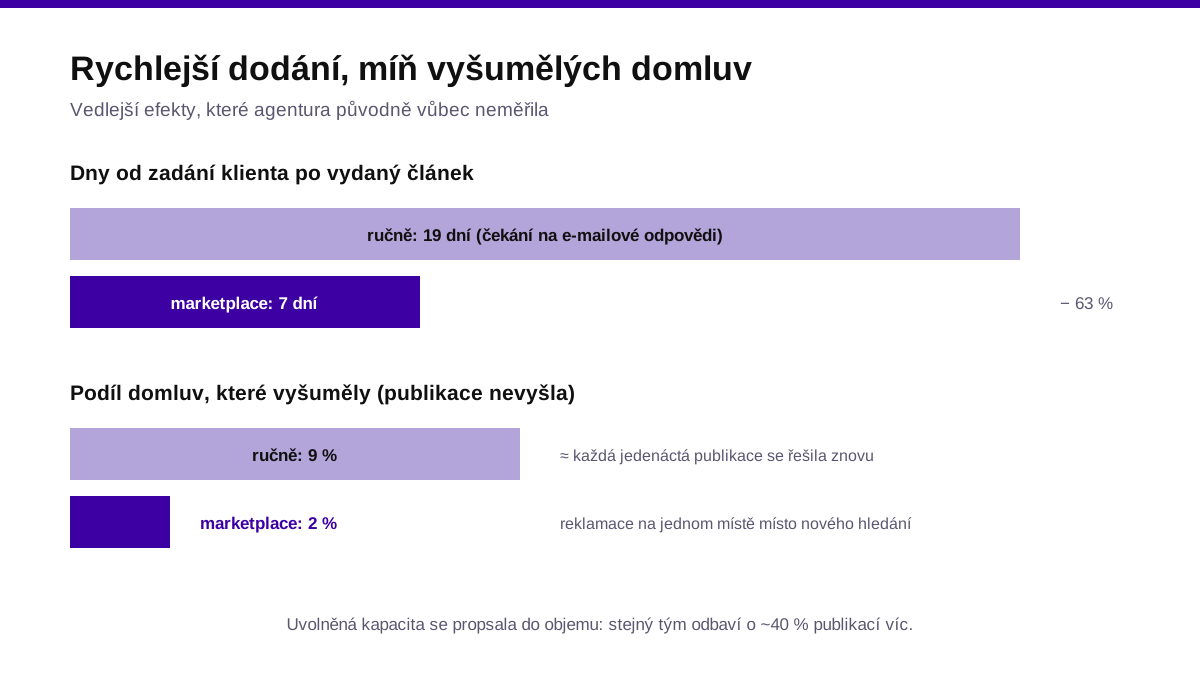
And one effect the agency did not expect: the 900 freed-up hours did not turn into quieter afternoons but into capacity. The same team now handles about 40% more publications – so the saving showed up not as lower costs but as higher revenue on the same people.
What cannot be read from these charts
Honesty first: this is a case study about process efficiency, not campaign results. Nothing in these figures says anything about the clients’ search rankings or their visibility in AI answers – that is measured differently and elsewhere. The time saving is also calculated from the agency’s internal records, not from independent measurement: step-by-step time tracking always carries spread and rounding. And converting hours into money stands or falls with the cost rate – a different rate gives a different number. The ratios (a three times faster process, a third of the delivery time, four times fewer fizzled deals) are, however, more robust than the absolute amounts.
Summary
The biggest item in the cost of manual link building is not the publication. It is the time it takes to arrange it.
The agency did not change what it does – media selection and quality control remained its work. It only changed where it buys: a catalogue with prices up front instead of e-mail negotiations, one invoice instead of eighteen. On the Linketica marketplace this process is available to anyone – with no minimum volumes, so an agency can first verify it on one client and its own numbers.
Časté otázky
How much time does buying one PR article by hand take?
How much did the agency save in a year?
Did the saving show anywhere other than in hours?
Does the time saving mean lower agency costs?
Can these numbers be trusted?
Zdroje a doporučená literatura
Zjistěte zdarma, jak vás vidí AI
Nechte jméno, e-mail a telefon a odemkneme vám online audit AI viditelnosti + checklist „Doporučuje vás AI?“ ke stažení.
Chcete rovnou nakupovat PR články a zmínky? Vyzkoušet Linketicu · Nezávazná poptávka na míru
Zadáním kontaktu souhlasíte s jeho použitím pro zpřístupnění auditu a zaslání tipů. Údaje nepředáváme dál. · Linketica.com