PR Articles as an Additional Service for PPC Consultants: What to Offer the Clients You Already Have
Selling an additional service to an existing client is an order of magnitude easier than winning a new one. And a PPC consultant sits on data that practically begs for PR articles and links in editorial content: they see where a click is most expensive and where demand is escaping into AI answers. Concrete cooperation models, a simple economic argument and what to watch out for.
Every PPC consultant knows the conversation. The client asks: “What else can we do to grow?” And the answer “let’s raise the budget” gets weaker year by year – click prices rise, auctions get crowded and part of the queries end in AI answers before any click happens at all. This text is about the other possible answer: native PR articles and links in editorial articles as an add-on service you can offer the clients you already have.
Why a PPC consultant of all people
At first sight it is a foreign discipline. In reality you have three head starts over anyone else:
- Trust. The client entrusts you with a budget and sees numbers from you every month. A new PR supplier starts from zero; you start from a signed invoice.
- Data. You know which keywords feed the client, where a click costs €0.80 and where €6, which landing pages convert. That is precisely the material a good PR article and media selection are made from.
- An argument nobody else has. The sentence “you pay €3.60 per click for this query – and here is a way to be visible on it without the auction” sells itself, because it comes from the client’s own numbers.
What exactly to offer
- Native PR articles. A text in a medium the client’s audience reads – written like editorial content, labelled as a commercial message, with a link to the client’s website. It builds the brand, the link profile and visibility in AI answers.
- Links in existing editorial articles. A cheaper and faster variant: a mention with a link is added to an already published and indexed text. No new content is written, the effect on the link profile is immediate.
- A combination with what you already do. You pour the article’s audience into remarketing; you support the landing page that wins in PPC with links so it grows organically too. Here you have the advantage – both halves are run by one head.
Four models for plugging it into your business
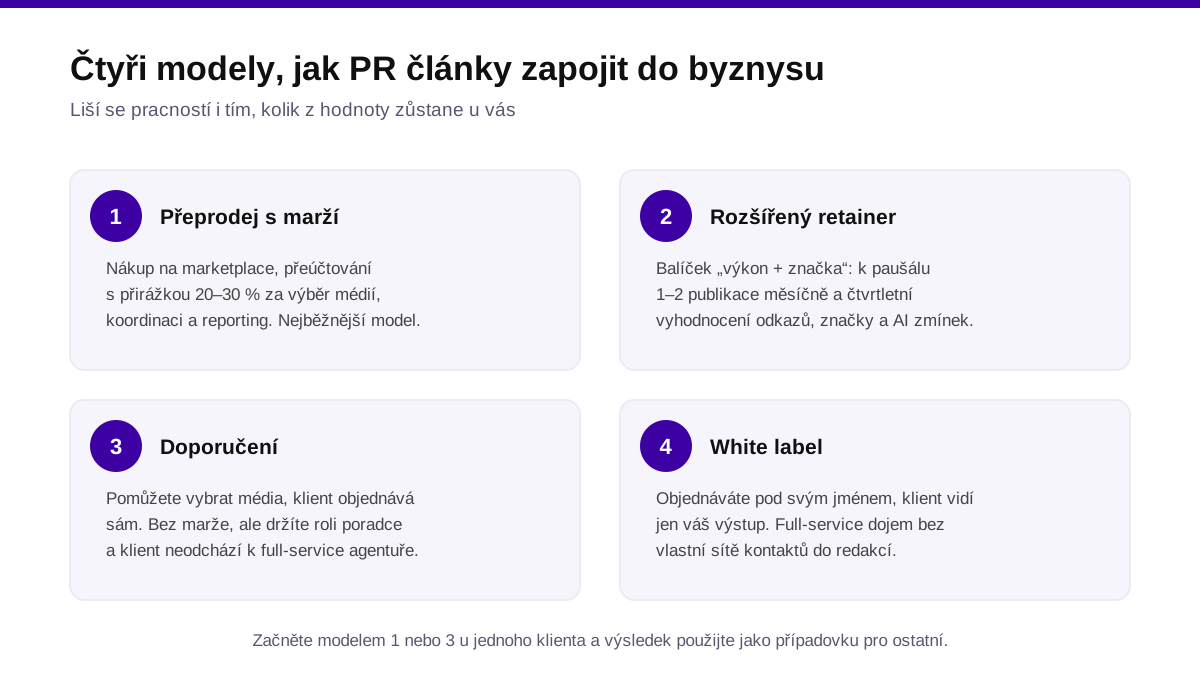
- Resale with a margin. You buy publications on a marketplace at list prices and re-bill the client with a 20–30% markup for media selection, coordination and reporting. The text is written by your copywriter or ordered together with the publication. The most common model – the client has one invoice and one partner, you have the margin.
- An extended retainer. To the monthly fee for campaign management you add a “performance + brand” package: one or two publications a month, a quarterly review of links, branded queries and mentions in AI answers. It raises the value of the retainer and gives you a reason to report more than cost-of-sale.
- Referral. Do not want to operate anything? You show the client the marketplace, help pick the media and they order themselves. You do not earn on the publications, but you keep the advisor role – and the client does not leave for an agency that will “do everything”.
- White label. You order under your own name and the client sees only your output. A model for consultants who want to act as full-service without building their own network of newsroom contacts.
A simple economic argument
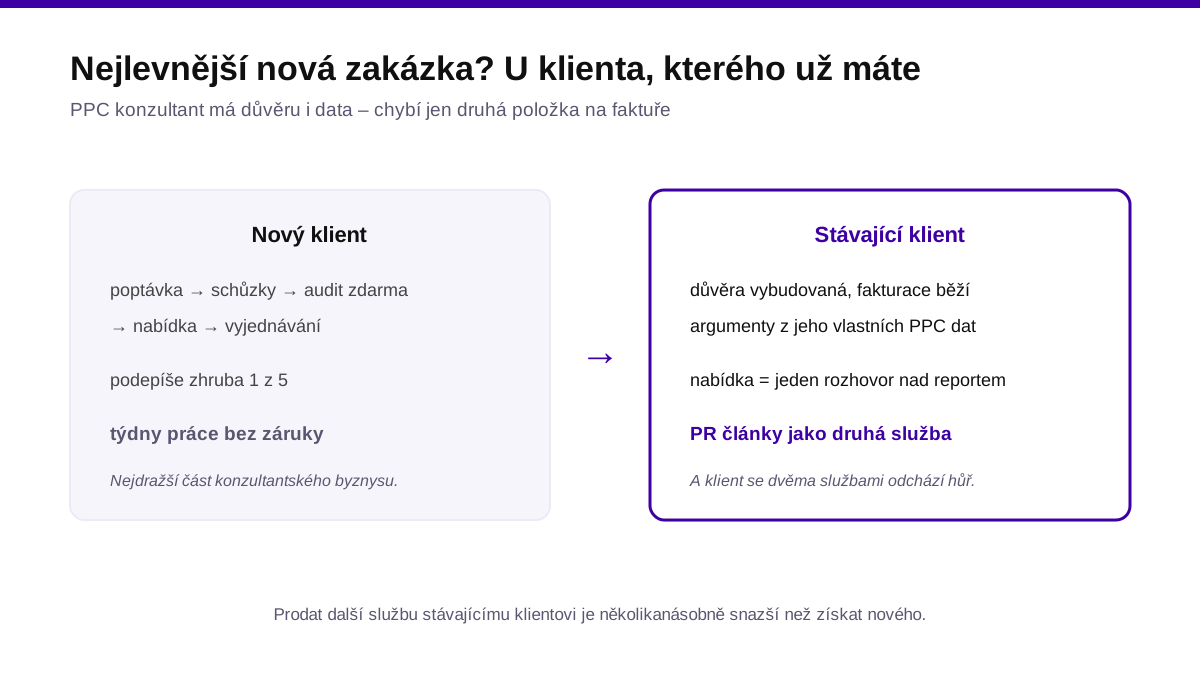
Now the main thing, deliberately without marketing frills. Winning a new client is the most expensive part of your business. Enquiries, meetings, proposals, free audits – and out of five serious negotiations one signs. Selling an additional service to an existing client skips that whole queue: trust is built, invoicing is running, you talk over shared numbers. The old sales rule says the chance of a sale to an existing customer is several times higher than to a new one – and in services where trust is what is sold, it applies twice over.
A sober model calculation:
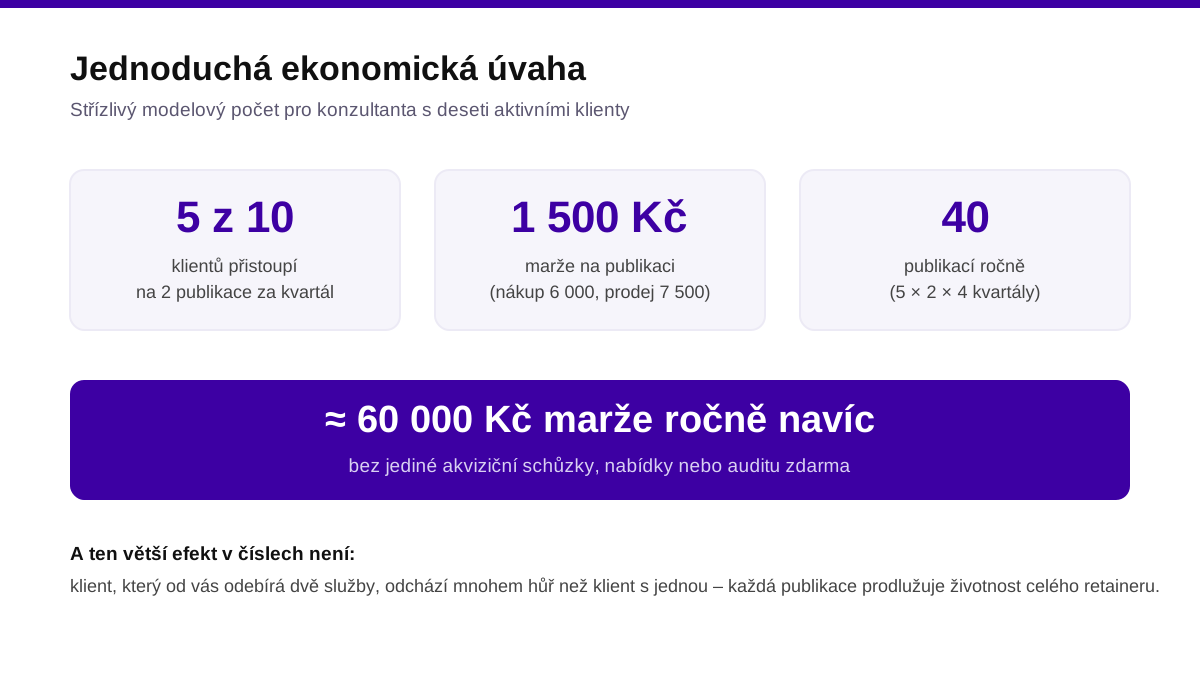
- You have 10 active clients. PR makes sense for half of them and they agree to 2 publications per quarter.
- An average publication with text costs about €240; with a 25% margin you bill €300. A margin of €60 per publication.
- 5 clients × 2 publications × 4 quarters = 40 publications a year, i.e. roughly €2,400 of extra margin a year – without a single acquisition meeting, with work largely done by the marketplace and the copywriter.
That is not a life-changing sum. But it is only the direct return. The indirect one is bigger: a client who buys two services from you leaves much less easily than a client with one. Every additional publication extends the life of the whole retainer – and a client’s value is not counted from one invoice but from how many months they stay with you. So you sell PR articles not just for the margin, but as insurance against the biggest risk of the consulting business: the day the client says “let’s try somewhere else”.
How to sell it to the client
Do not sell “link building”. Sell the solution to a problem the client sees in your own report:
- Expensive keywords. Pull out the ten queries with the highest CPC and show what it would cost to be visible on them organically and in AI answers.
- Rising cost of sale. When performance stagnates, brand is the lever that moves both conversion rate and click price – whoever knows the client clicks cheaper.
- AI answers. Ask ChatGPT or Google AI for recommendations in the client’s industry. When the client is not there and the competition is, you have a sales argument that fits on one screen.
What to watch out for
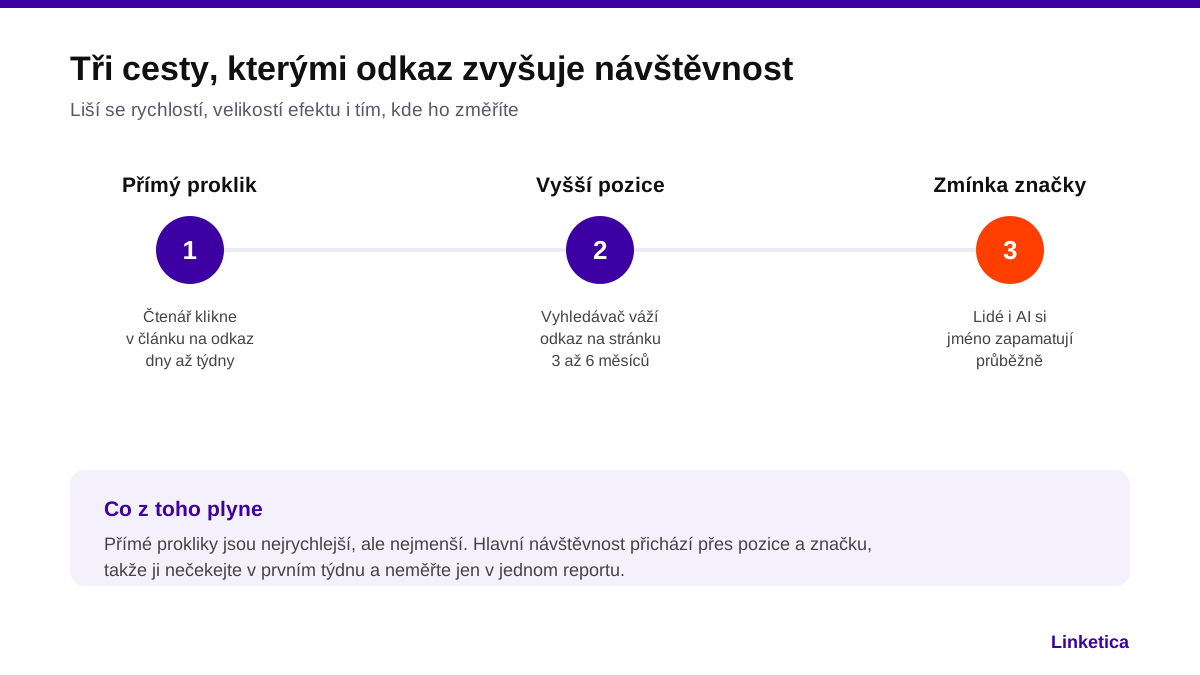
- Promise a horizon, not rankings. Links and mentions show up in three to six months. Tell that up front to a client used to weekly PPC reports, so expectations do not sink a good service.
- Labelling advertising. Paid publications belong labelled and links carry the rel="sponsored" attribute. An offer built on unlabelled follow links sells the client risk.
- Do not buy metrics, buy media. A site without readers but with high “authority” is a line in a spreadsheet, not a recommendation. Pick titles the client’s audience actually reads.
- Start with one client. Verify the process with the one where the relationship is strongest and use the result as a case study for the others.
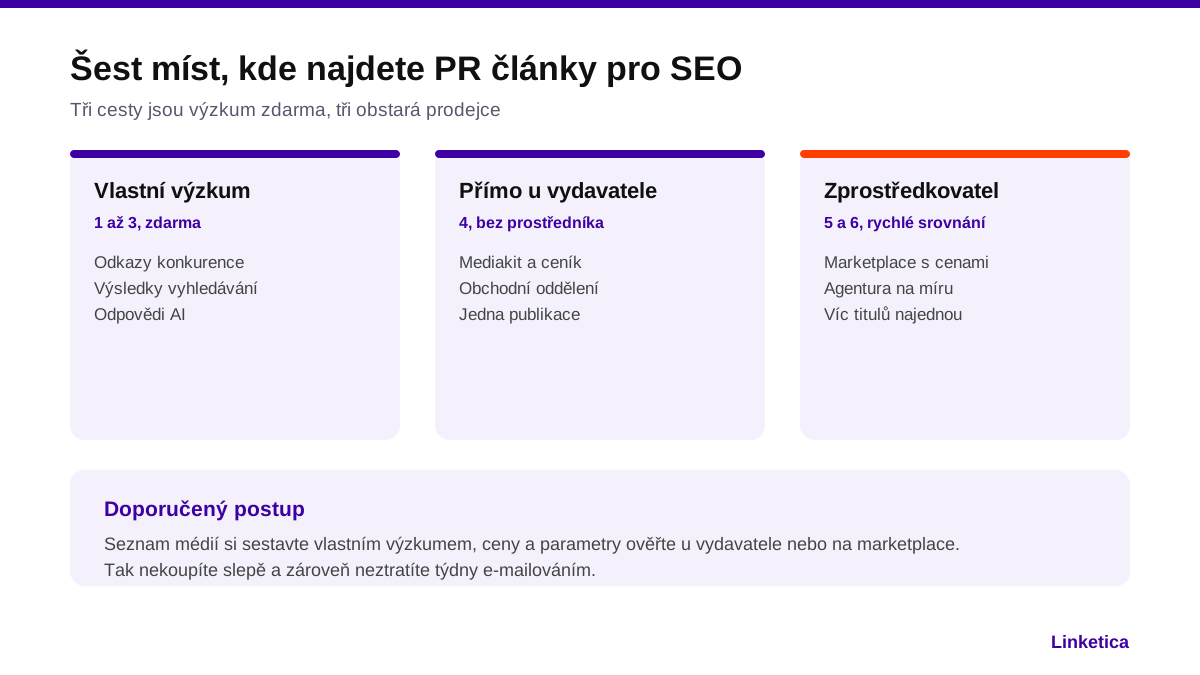
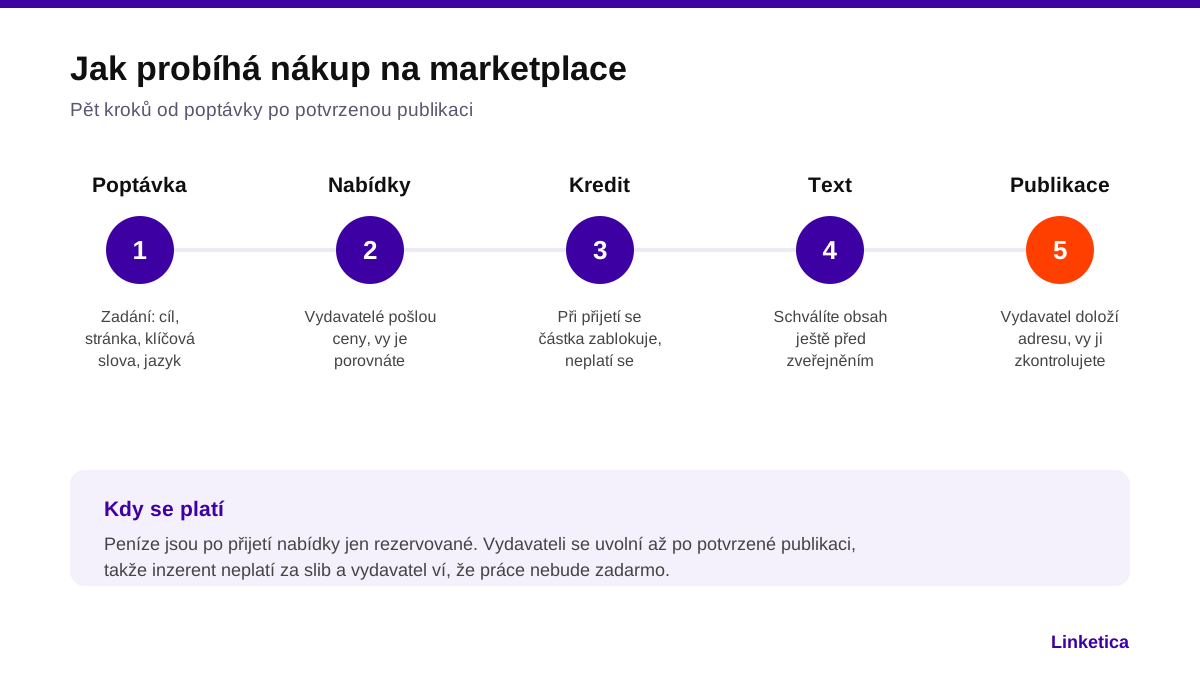
Operationally it is simpler today than it looks. On the Linketica marketplace you see the prices and parameters of hundreds of Czech and Slovak media up front, you order with no minimum volumes and no commitments – so you can calculate your margin before you promise the client anything.
Časté otázky
Why should a PPC consultant offer PR articles?
How does a consultant who cannot write earn on PR articles?
How much extra can a consultant earn this way?
What are links in editorial articles?
How to sell PR articles to a client used to performance numbers?
What to watch out for when reselling?
Zdroje a doporučená literatura
Zjistěte zdarma, jak vás vidí AI
Nechte jméno, e-mail a telefon a odemkneme vám online audit AI viditelnosti + checklist „Doporučuje vás AI?“ ke stažení.
Chcete rovnou nakupovat PR články a zmínky? Vyzkoušet Linketicu · Nezávazná poptávka na míru
Zadáním kontaktu souhlasíte s jeho použitím pro zpřístupnění auditu a zaslání tipů. Údaje nepředáváme dál. · Linketica.com